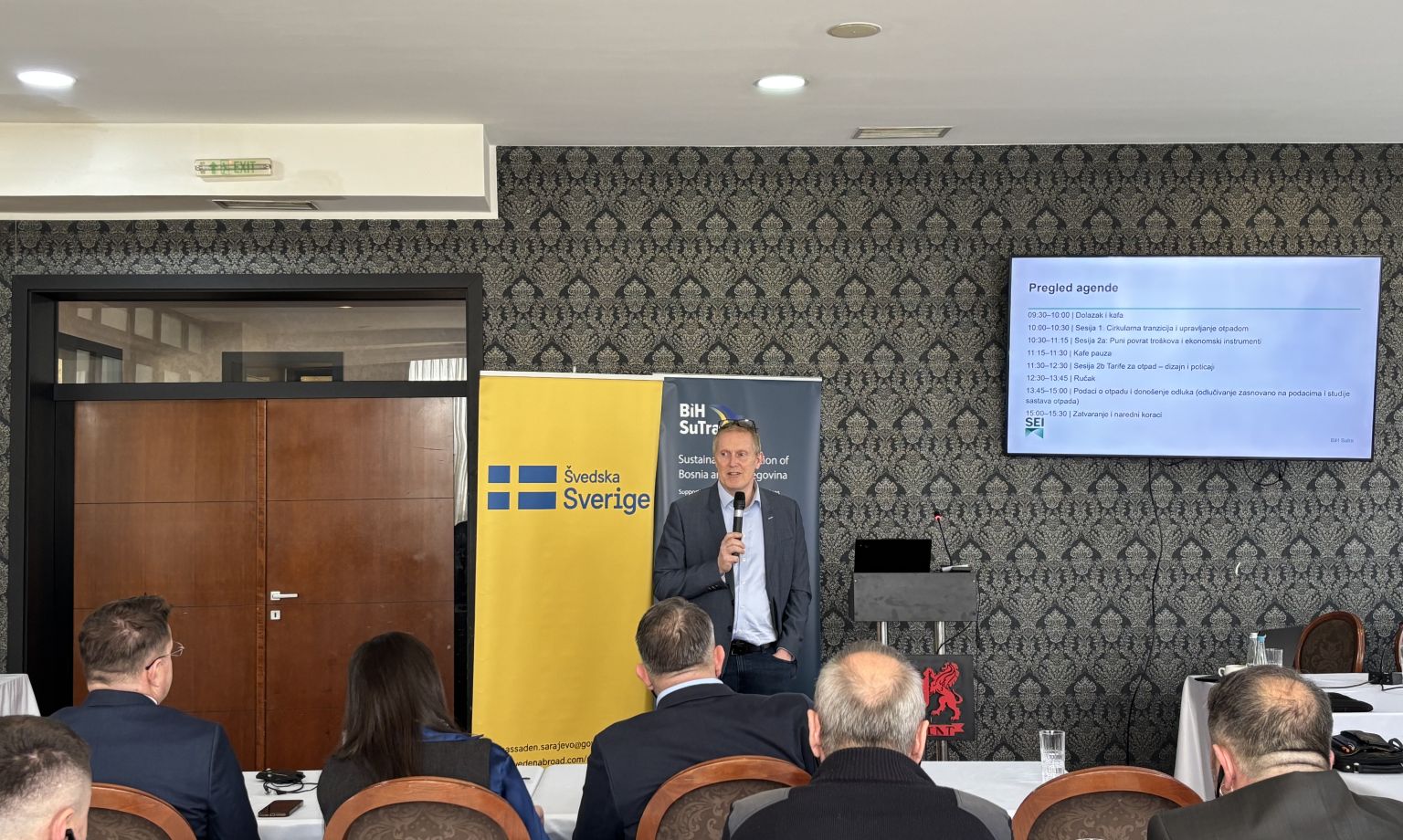
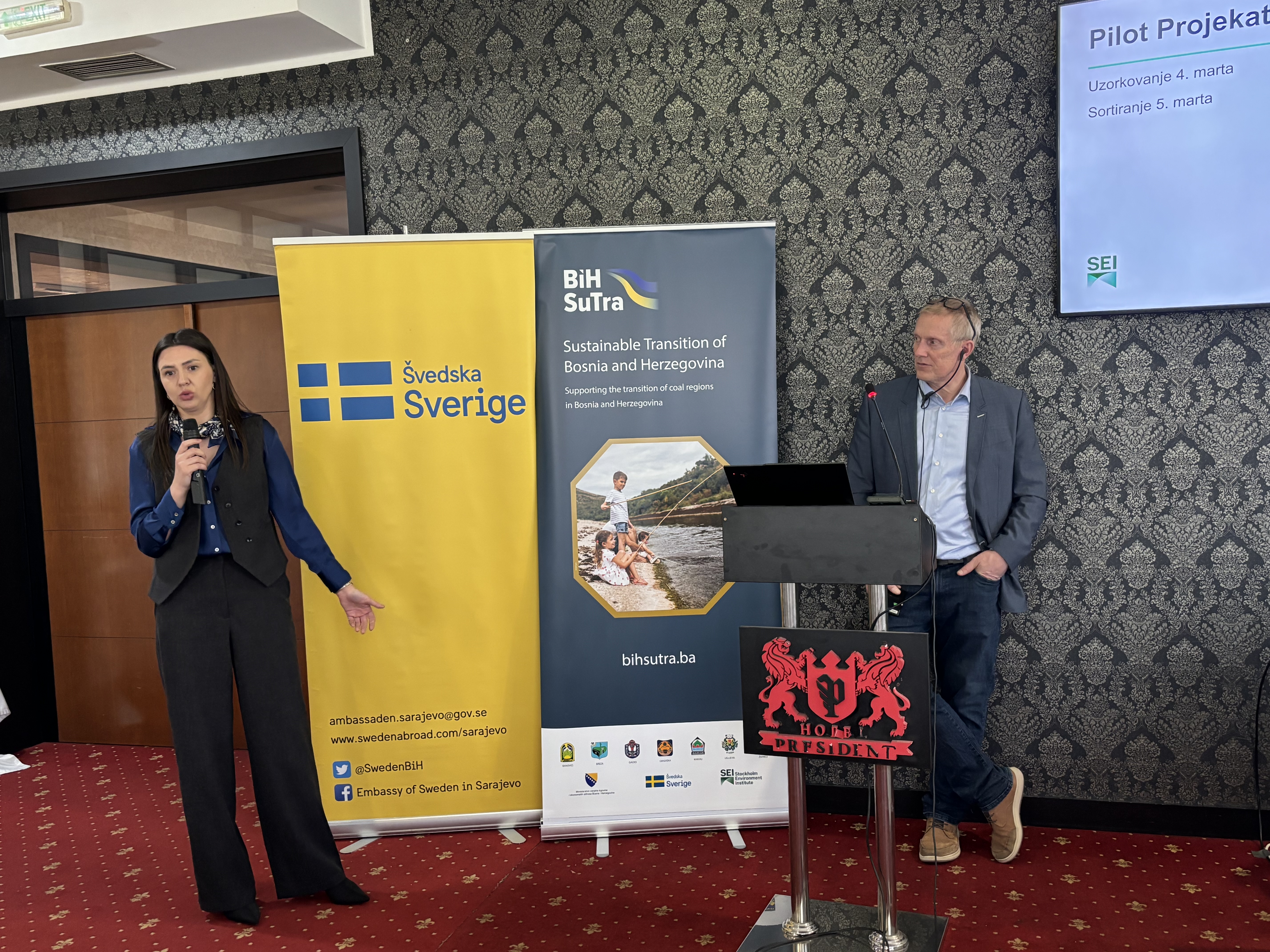
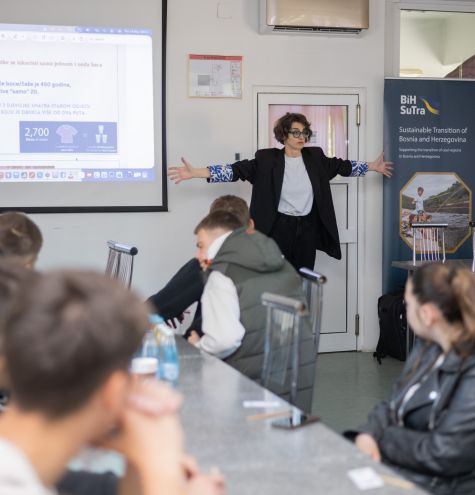
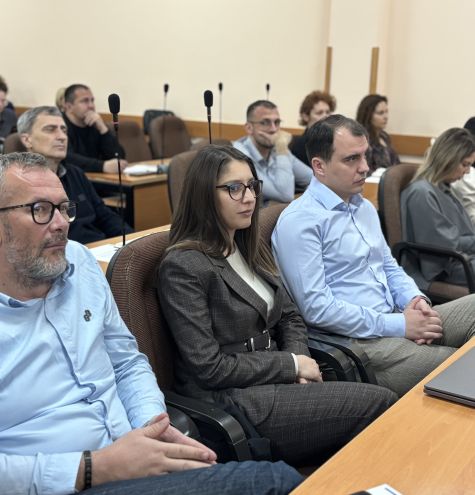
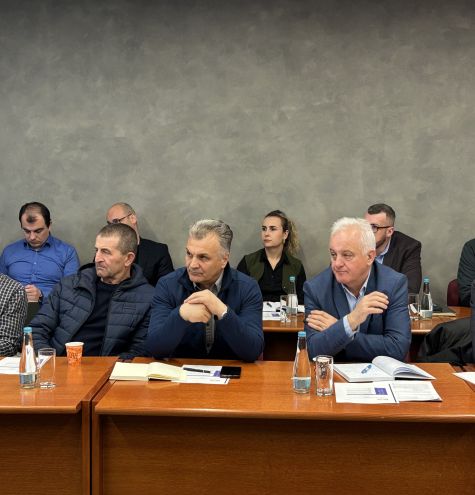
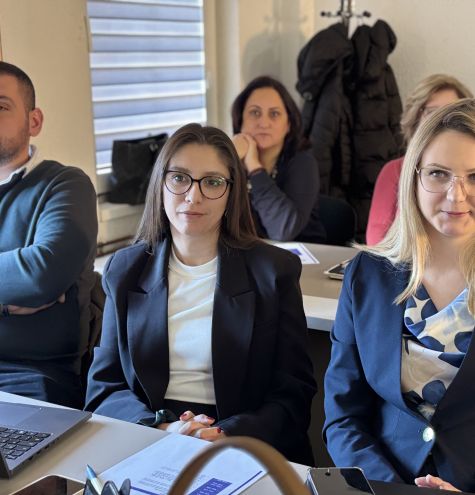
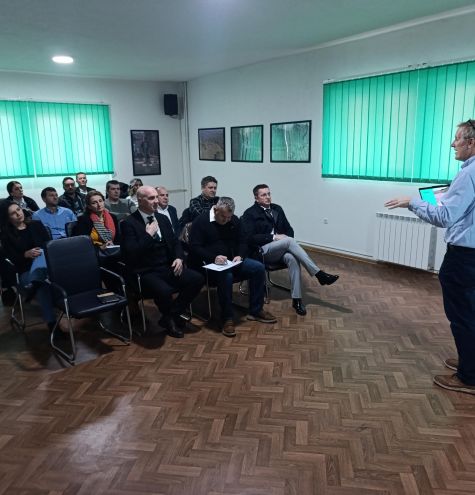
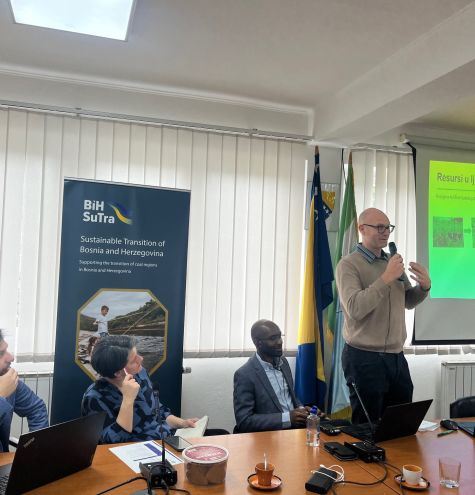
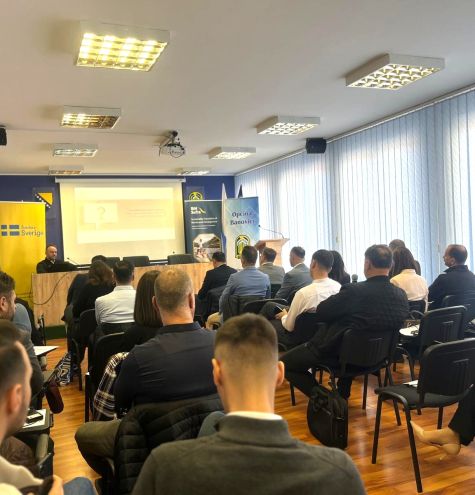
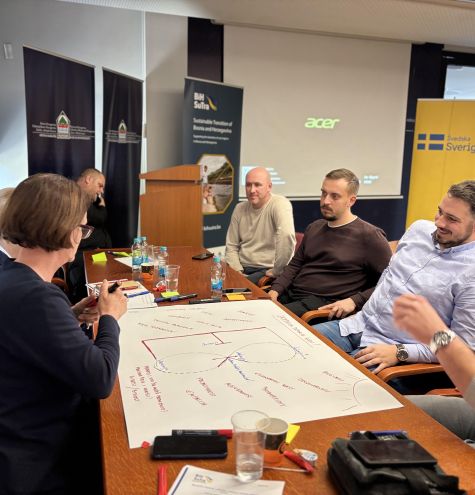
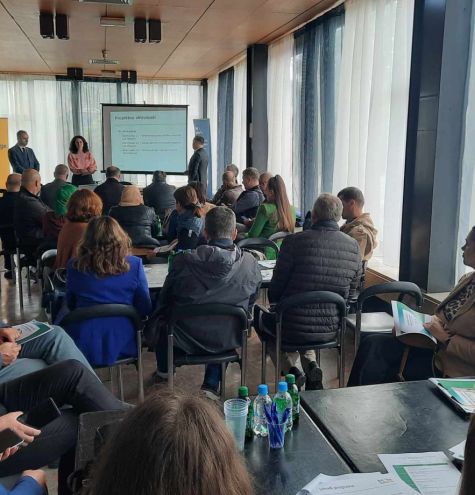
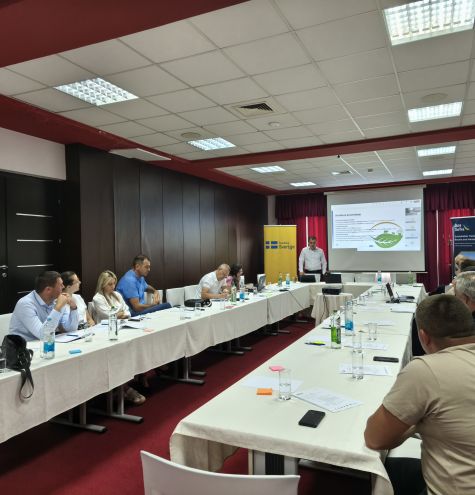
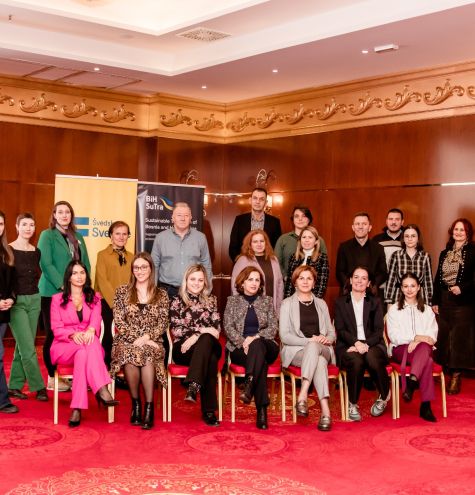
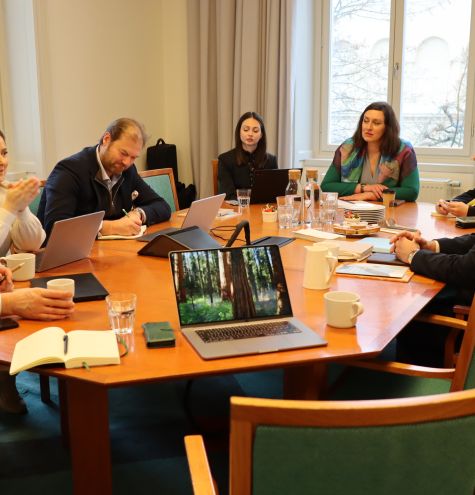
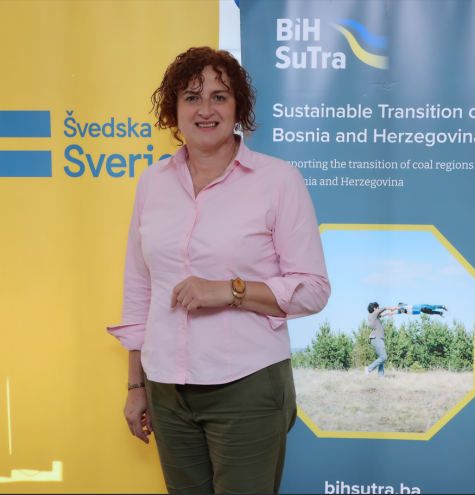
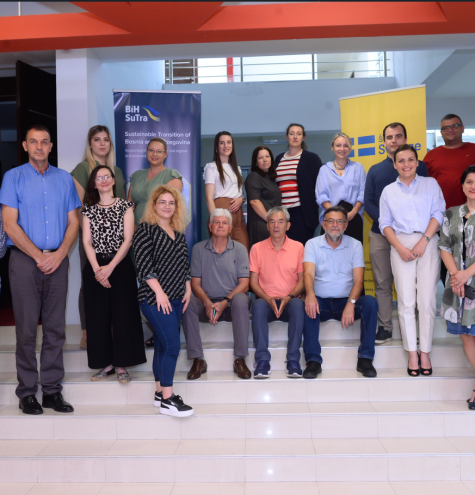
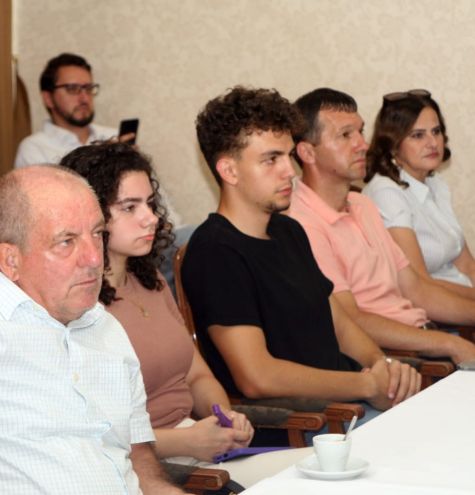
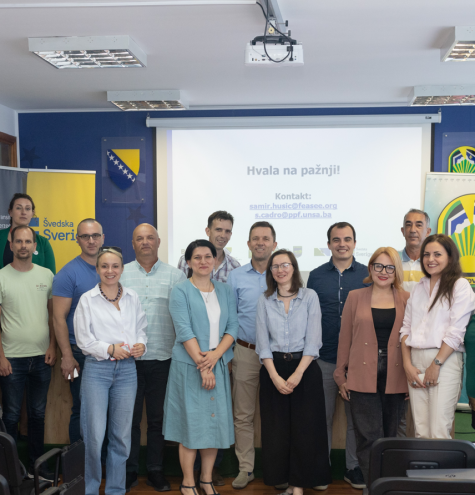
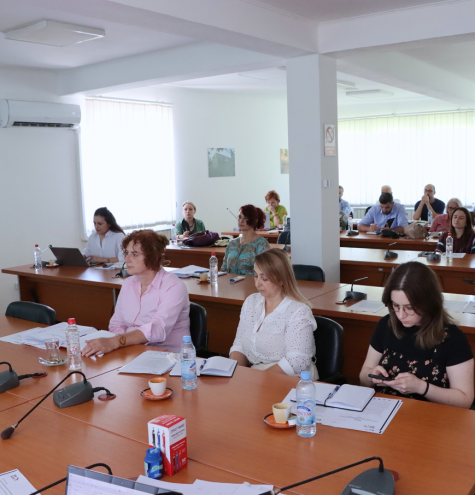
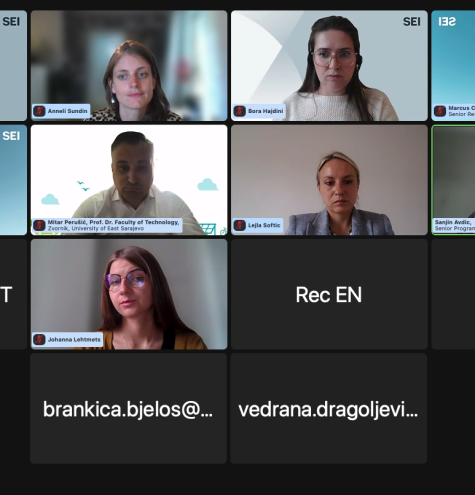
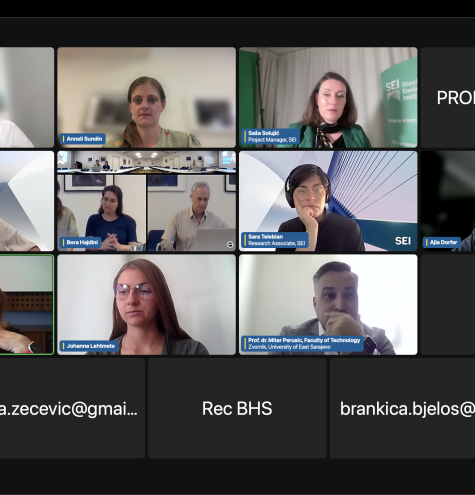
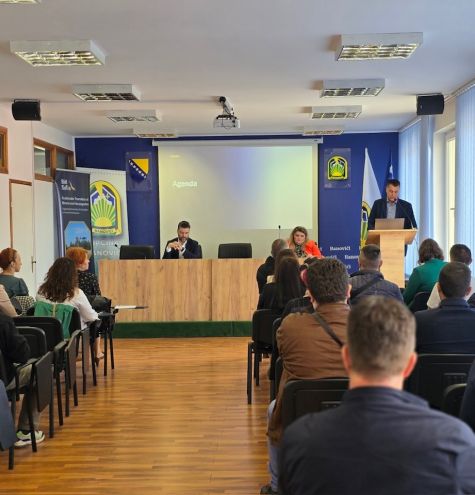
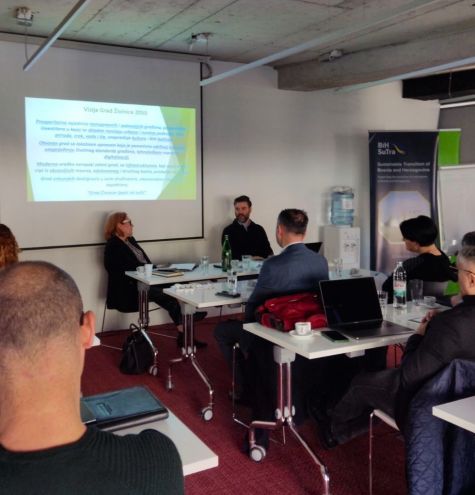
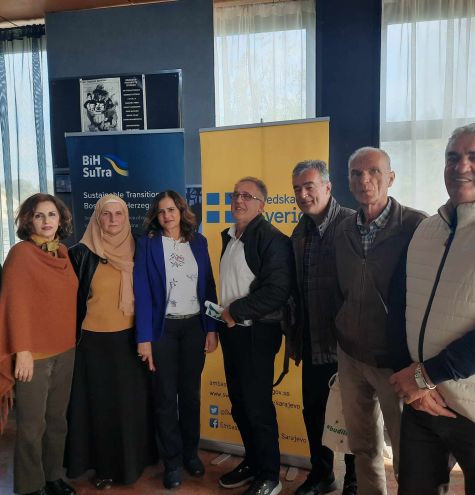
 Workshop in Živinice. Photo: BiH SuTra team.
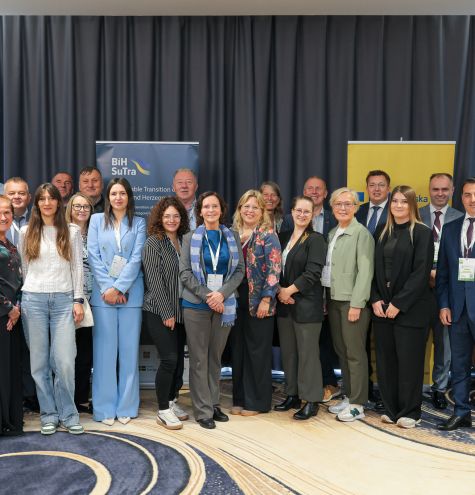
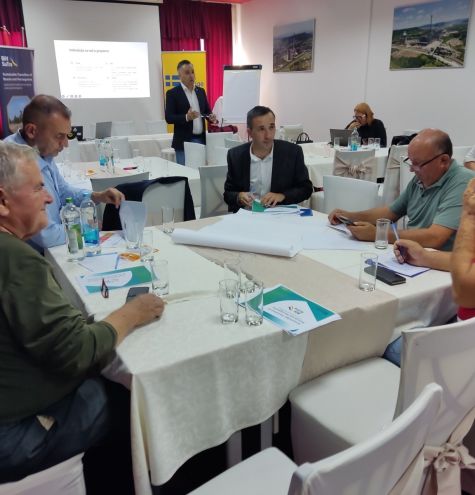
Workshop in Živinice. Photo: BiH SuTra team.
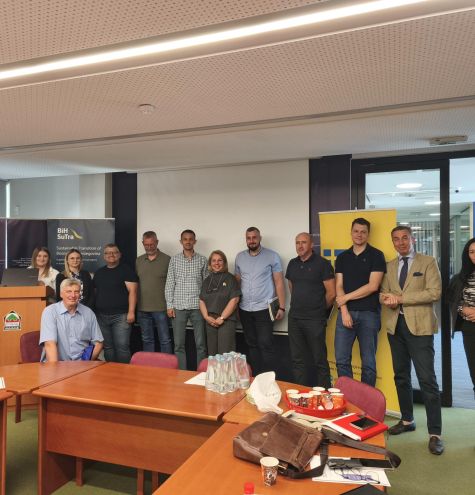
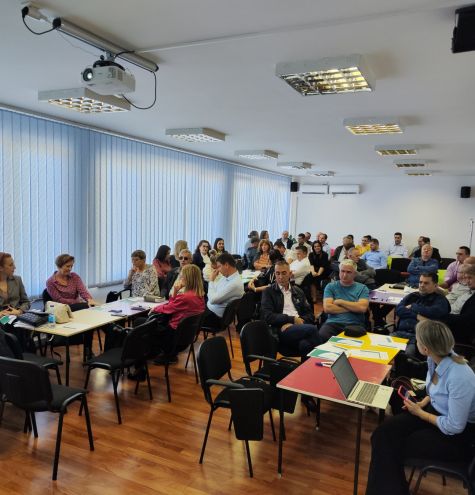
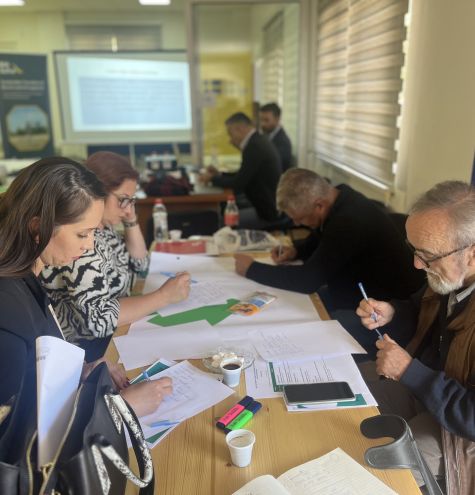
Workshop in Živinice. Photo: BiH SuTra team.
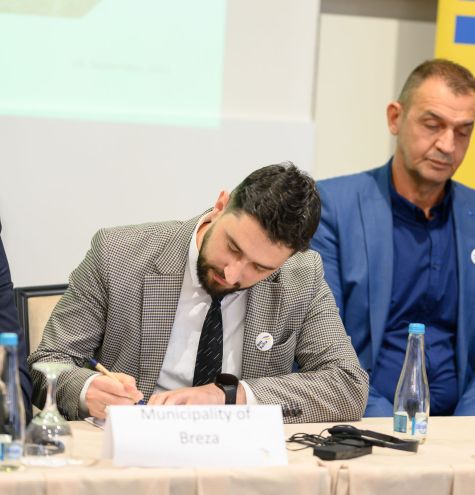
On 3 March 2026, representatives of the project partner municipalities and cities gathered in Živinice for a capacity building workshop aimed at strengthening municipal waste management capacities. The event was part of the broader effort to support municipalities and cities in advancing their sustainable transition plans and improving local waste management systems.
The training focused on the strategic role of waste prevention, sustainable financing of waste management services, and the use of data for informed decision-making. The workshop was led by Tomas Thernström from SEI, a senior expert in circular economy and waste management. Thernström is a certified waste prevention coach with an economics background and has led the development of several national guidelines on municipal waste management and producer responsibility schemes in Sweden.
During the workshop, participants from the seven BiH SuTra partner municipalities and cities – Banovići, Breza, Ugljevik, Živinice, Kakanj, Gacko, and Gradiška – worked alongside the waste management companies Eko-Sep, Gradska čistoća a.d. Gradiška, Vodokom Kakanj, and Akva Invest Ltd. Živinice to explore strategies for translating circular economy principles into practical local actions.
From circular principles to municipal practice
The morning session introduced circular economy concepts and their relevance for municipal decision-making. Participants discussed the shift from linear production and consumption models towards circular systems emphasizing waste prevention, reuse, and resource efficiency. Swedish examples highlighted how municipal waste management systems can act as enablers of a circular transition, linking European policy frameworks to local implementation realities.
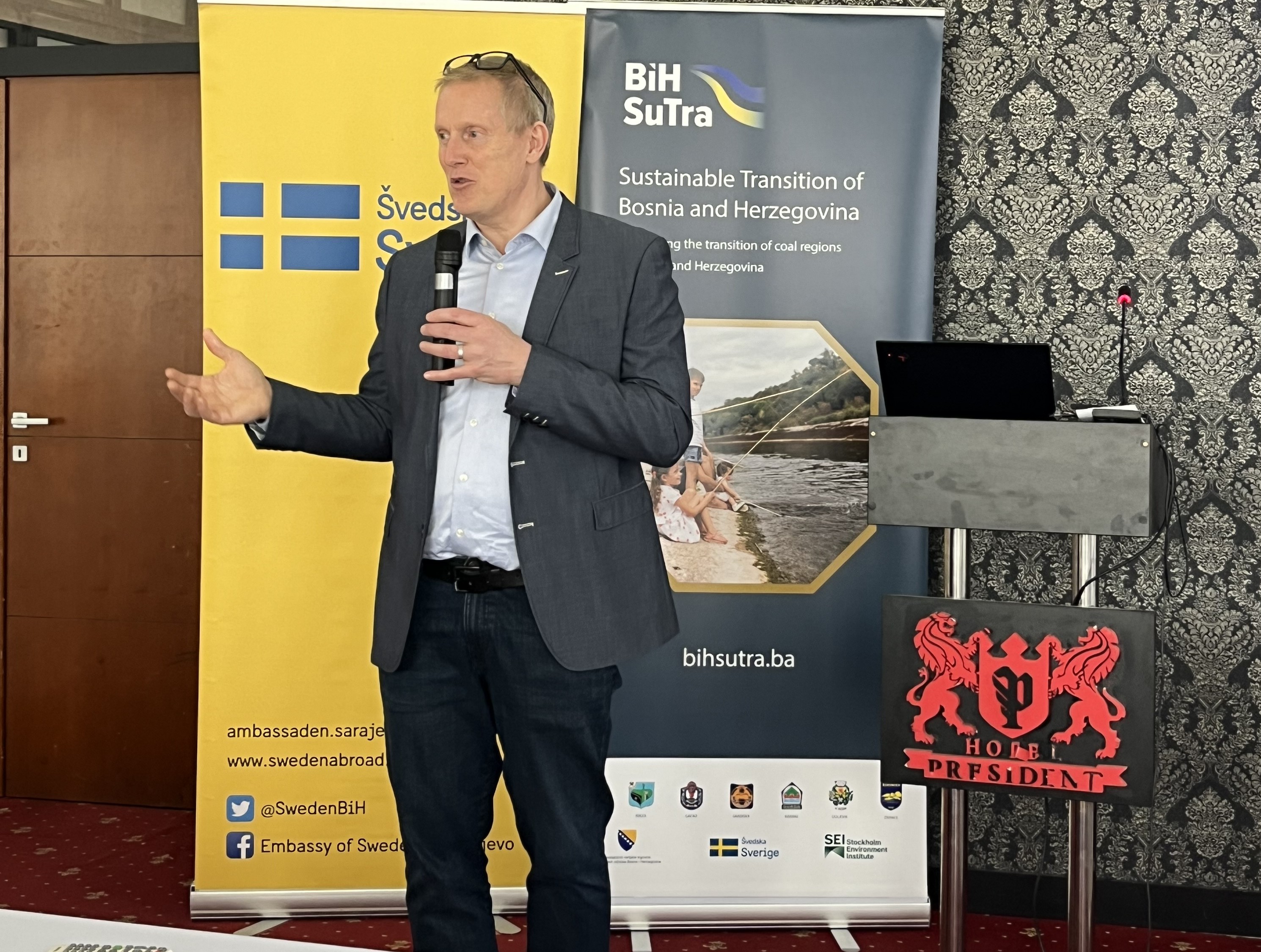
“Waste management is not just about handling waste at the end of the line,” Tomas Thernström explained. “It provides essential insights into which materials are hard to recycle or treat safely. This knowledge can guide product design, prevent waste upstream, and make the transition to a circular economy possible at the local level.”
Economic sustainability and tariff design
A key session focused on economic instruments for sustainable waste management, including full cost recovery, tariffs, gate fees, taxes, and extended producer responsibility schemes. Swedish examples demonstrated how fixed and variable tariff components can encourage waste prevention and source separation while ensuring financial sustainability. Participants shared challenges and discussed practical steps to improve tariff structures locally.
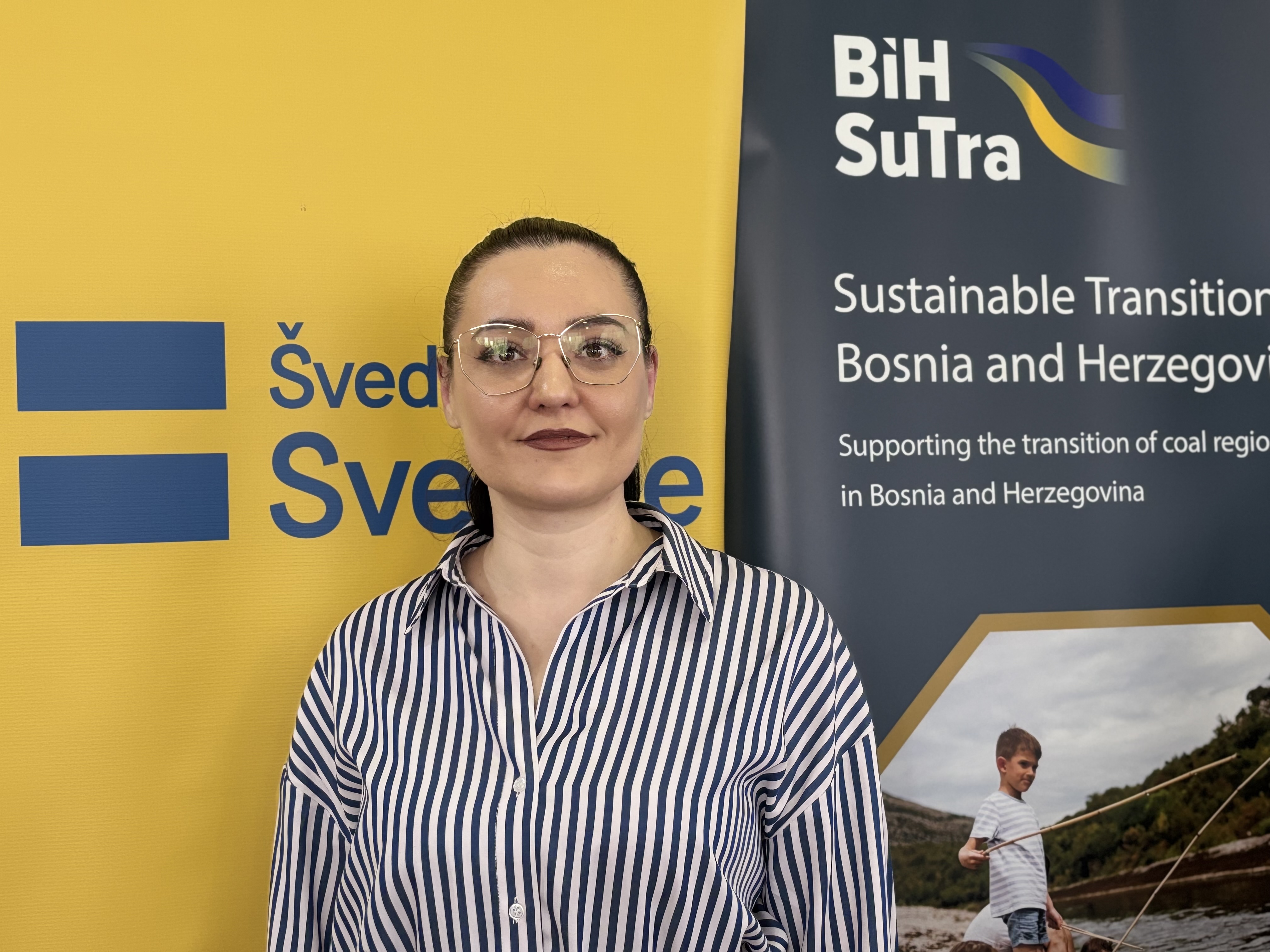
The discussion resonated strongly with the City of Gradiška, which is currently revising its local waste management plan. Marina Vukotić from the City of Gradiška, Head of the Department for Energy Efficiency and Environmental Protection, stated:
“The topic of the circular economy is particularly important for us, as we are currently in the process of developing a new local waste management plan. Workshops like this are invaluable because they allow us to learn from good practices in Europe, as well as exchange experiences between cities, municipalities, and entities. While we often have legal frameworks in place, in practice we face challenges, especially when it comes to managing special waste streams such as batteries, electronic waste, and used tires. It is crucial to start with education and improving system organization, so that we can effectively integrate the principles of the circular economy into both local and entity-level plans, in line with the upcoming national strategy.”
Using waste data for better decisions
The afternoon session emphasized the importance of reliable waste data for planning, investment, policy development, and communication. Participants explored municipal data needs, including waste quantities, composition, service coverage, and costs. The workshop also presented the ongoing development of a harmonized Waste Composition Study (WCS) methodology, tested in collaboration with Eko-Sep and the municipalities of Banovići, Kladanj, and Živinice, as a practical tool for evidence-based planning.
“Without reliable data, decisions become guesswork,” Tomas Thernström noted. “Municipalities and cities need to understand how much waste is generated, what it contains, and what it costs. This information forms the foundation for better planning, tariff design, investment, and policy-making.”
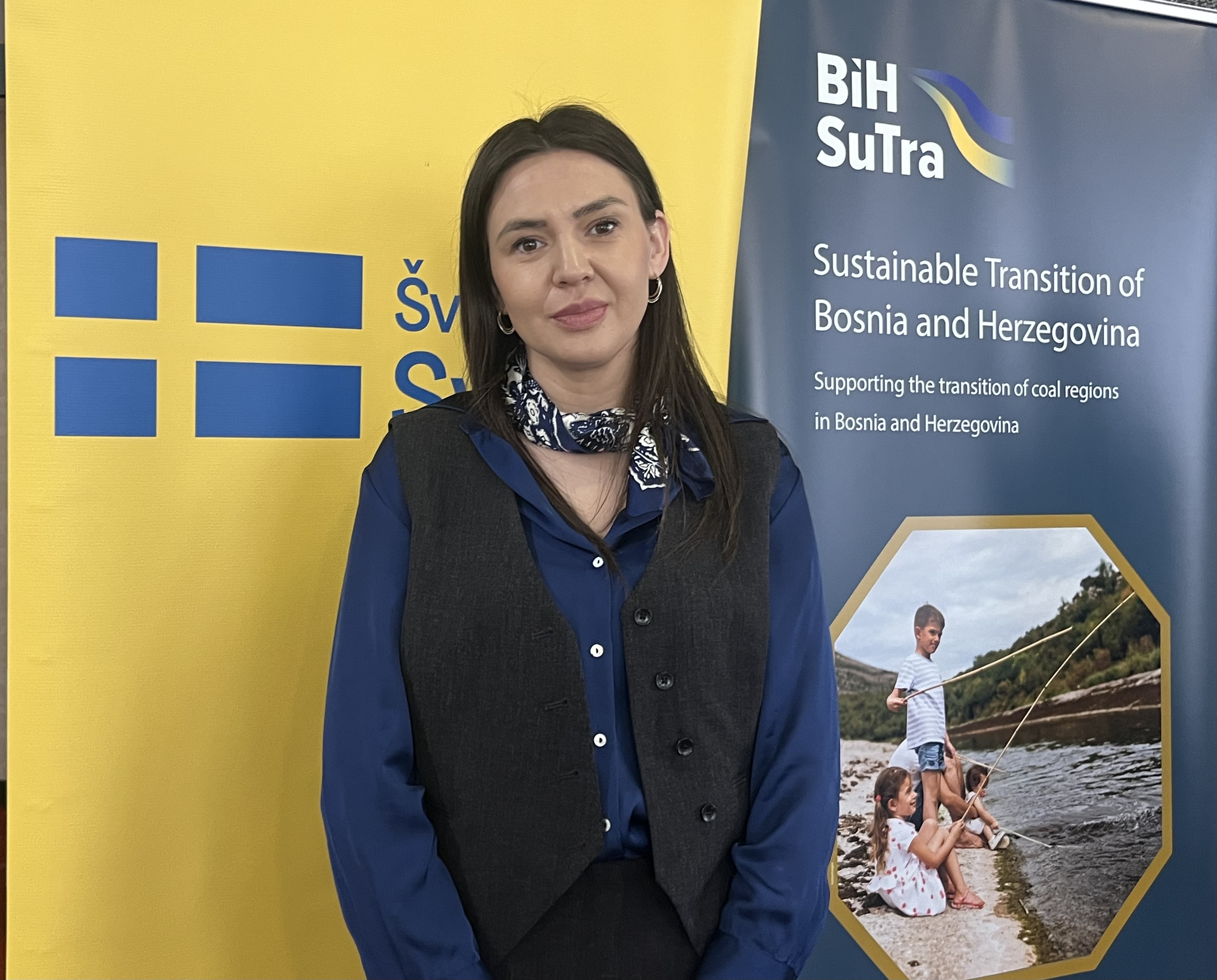
The importance of data-driven planning and regional coordination was particularly emphasized by infrastructure operators directly responsible for waste treatment and disposal. Director of Eko-Sep, Lejla Alagić, emphasized that the experience and recommendations of experts from SEI are highly significant for further development of the waste management system.
“Our goal is not for the landfill to remain merely a disposal site, but to develop it into a modern waste management center. There is clear potential for it to evolve into a regional center that would manage waste from across the entire Tuzla Canton. In this process, we aim to apply best practices from Sweden and adapt them to our local context. We are currently conducting a waste composition analysis, which represents a key step in properly planning the next phase of the project. This phase includes the establishment of a mechanical-biological waste treatment system, to be preceded by primary waste separation—either at the point of generation or at the landfill itself. Following detailed calculations, we will decide on the most efficient and economically viable model. At today’s workshop, we heard that in Sweden only 1–2% of waste is currently disposed of in landfills, while in our case 100% of municipal waste is still landfilled. This clearly demonstrates the significant room for improvement. I believe it is better to start today than tomorrow. Tuzla Canton already has quality infrastructure in place—the new Regional Sanitary Landfill Eko-Sep, the first sanitary solid waste landfill built in compliance with all EU standards, serving Živinice, Banovići and Kladanj. I see no reason why, building on Swedish experience, we should not move forward and achieve measurable, long-term sustainable results,” Alagić stated.
This reflected a broader shift discussed during the workshop — from viewing landfills solely as disposal sites toward developing integrated regional waste management centers aligned with circular economy objectives.
The workshop demonstrated that advancing circular waste management in Bosnia and Herzegovina requires not only policy alignment, but also practical tools, financial reform, reliable data, and strong cooperation between municipalities, cities and infrastructure operators.
From method development and training to pilot study
This training built on the workshop of 16 December 2025 in Banovići, which focused on waste composition analysis. The event in December brought together mayors, senior officials, and technical staff to develop a harmonized Waste Composition Study (WCS) methodology. This is based on Swedish methodology but has been adapted to Bosnian conditions.
The training this week was followed by a pilot study conducted in collaboration with the municipalities and cities of Živinice, Banovići and Kladanj and Eko-Sep. Eko-Sep is their joint waste management company and operates the regional landfill. As part of the study, they tested the newly developed method for sorting household waste. Watch this space for more on this project activity!
The BiH SuTra project is funded by the Swedish International Development Cooperation Agency (SIDA) in Bosnia and Herzegovina and implemented by the Stockholm Environment Institute (SEI). It aims to enhance the country’s capacity to implement environmental and sustainable transition policies at the local level.
Discover the News and Updates section, delivering the latest updates and insightful content across various topics. Stay informed with most recent news articles, reports, and publications, of the BiH SuTra project.
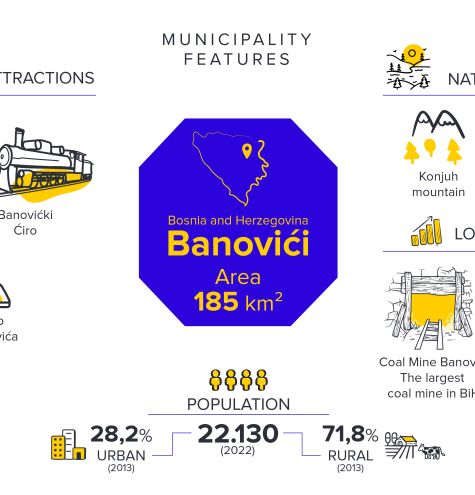


 Banovici
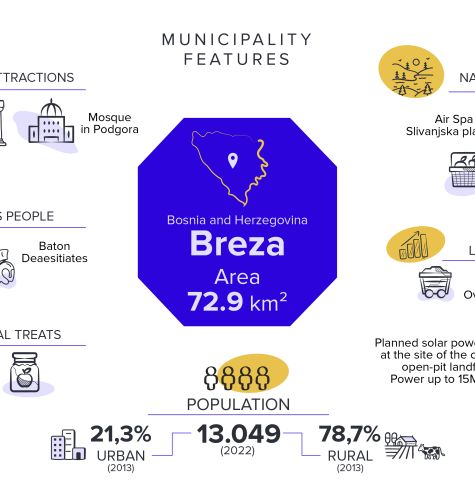
 Breza
Breza
 Gacko
Gacko
 Gradiška
 Kakanj
 Ugljevik
 Živinice
 Ministarstvo vanjske trgovine i ekonomskih odnosa BiH
 Stockholm Environment Institute
 Sweden