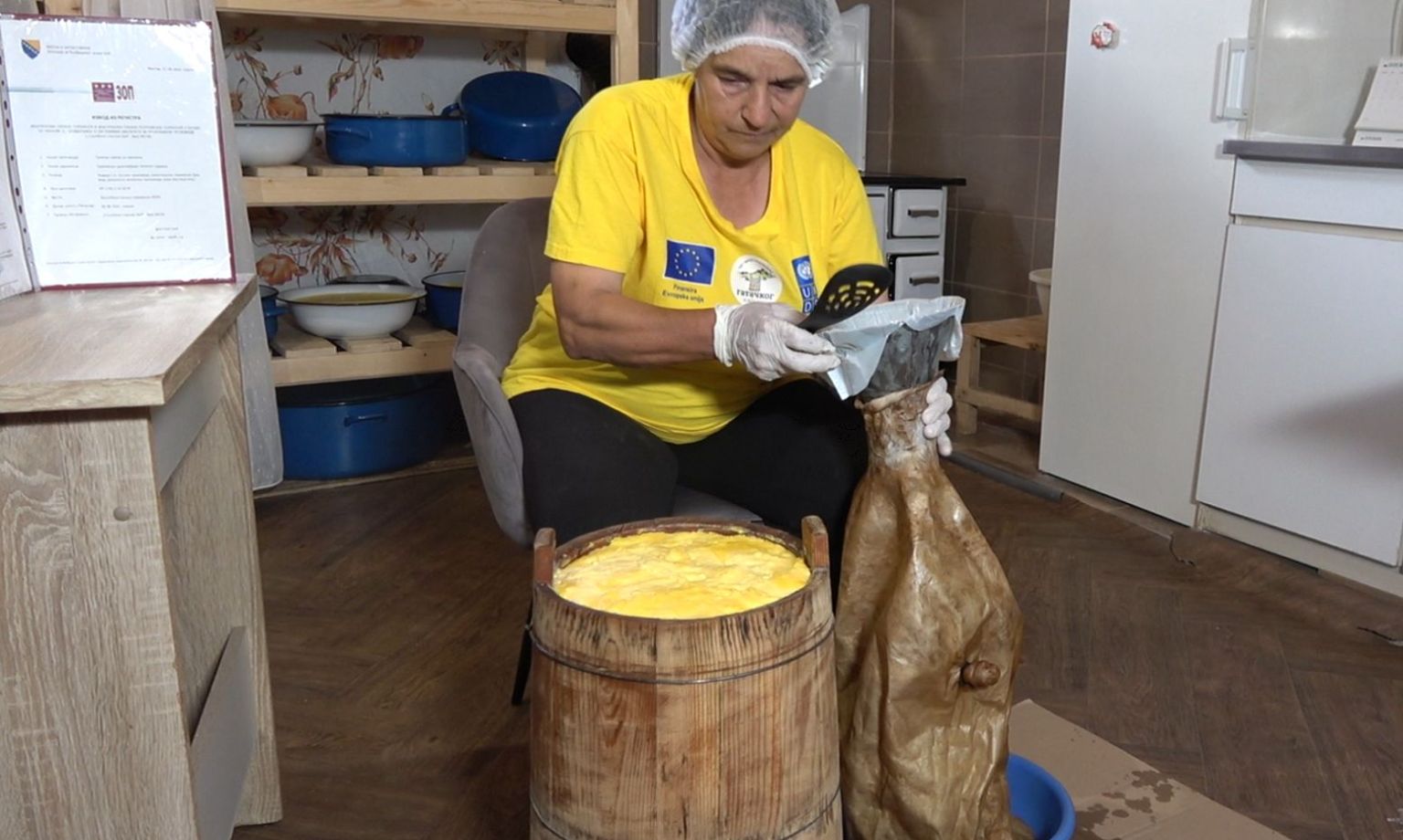
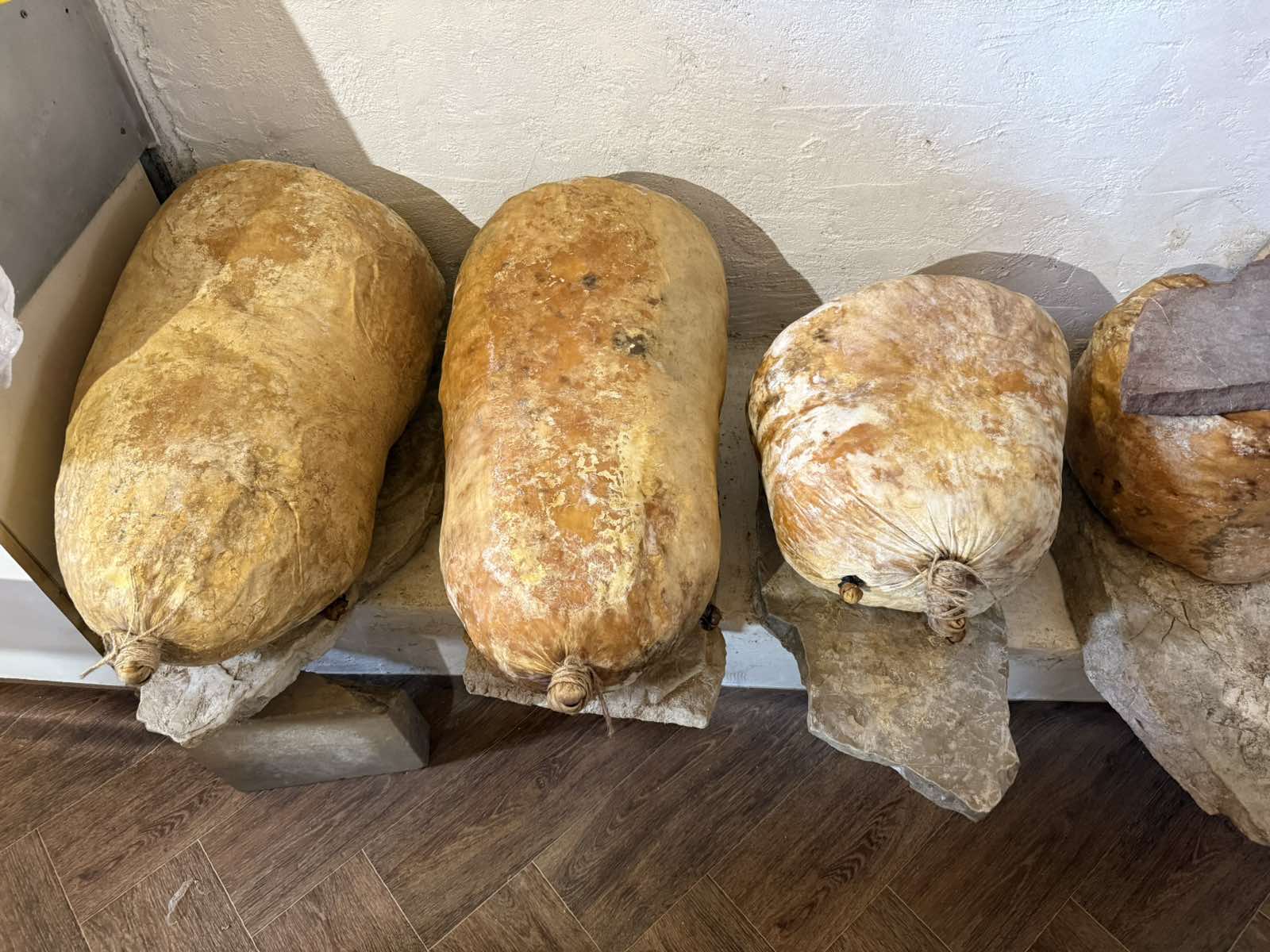
 Women wrapping kajmak cheese in animal hide after it has rested for around 20 days in a wooden barrel. Photo: Milan Buha.
Women wrapping kajmak cheese in animal hide after it has rested for around 20 days in a wooden barrel. Photo: Milan Buha.
Women wrapping kajmak cheese in animal hide after it has rested for around 20 days in a wooden barrel. Photo: Milan Buha.
Traditional know-how preserved
This blog post was originally published on the website of The Swedish International Agricultural Network Initiative – SIANI. Reposted on BiH Sutra website with permission.Read the original post here.
In the highland pastures of southeast Bosnia and Herzegovina, food is more than a meal, it is memory, culture, landscape and livelihood shaped over generations. In Gacko, a small cattle-herding municipality where agriculture remains central to daily life, one traditional product carries this connection particularly strongly: gatački kajmak iz mješine (Gacko kajmak “aged in a skin bag”).
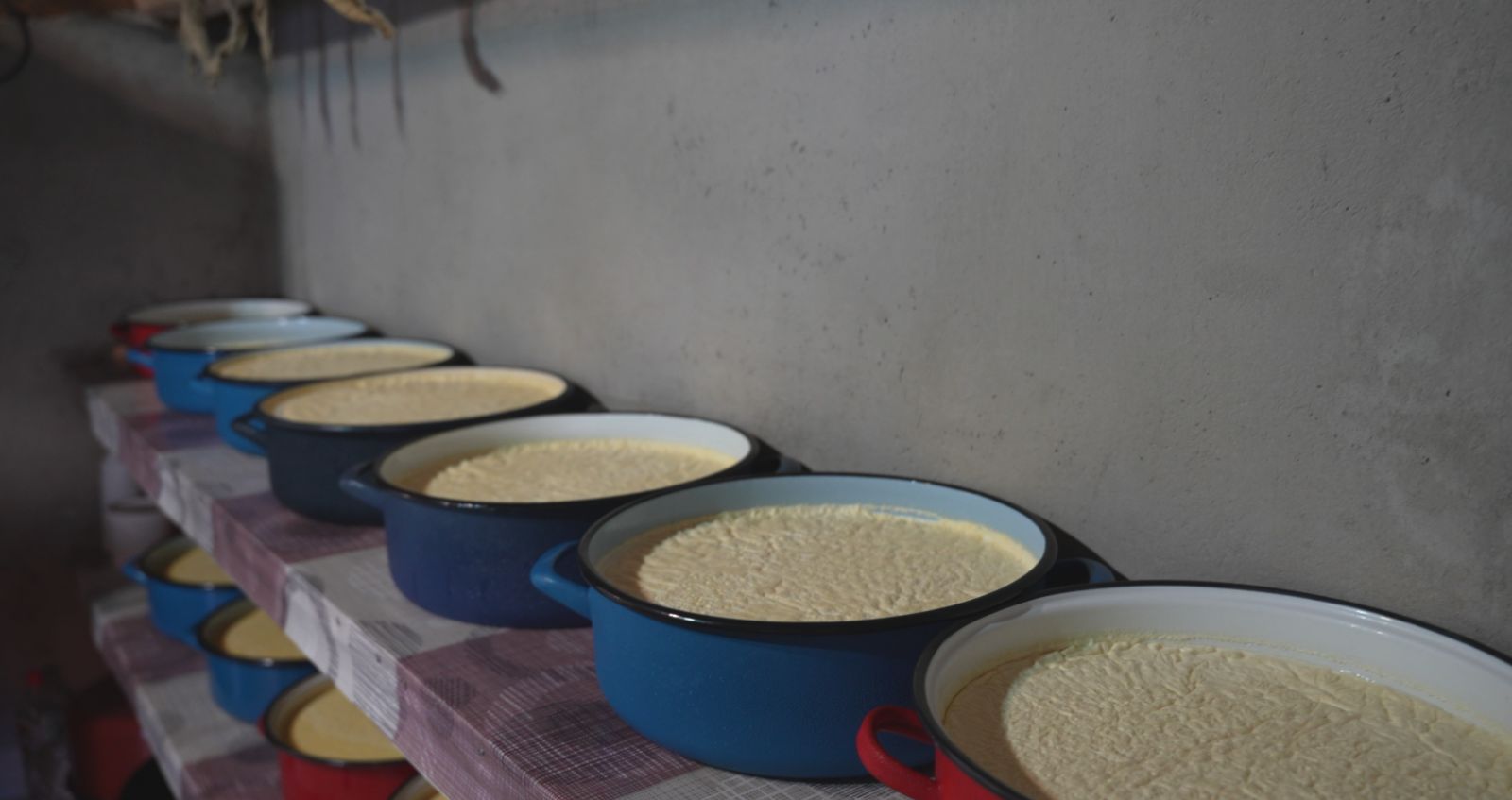
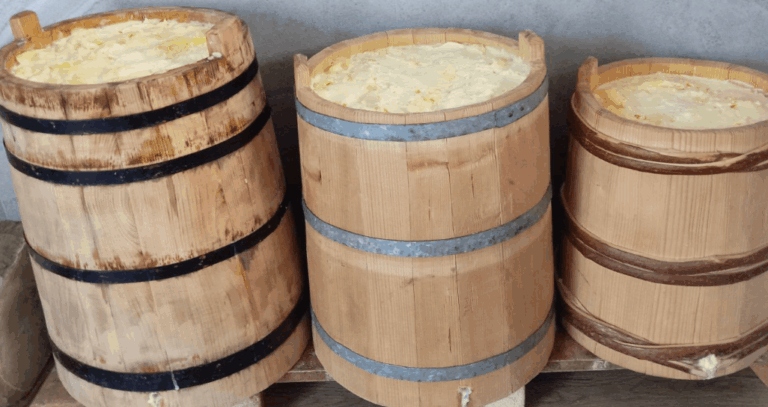
This unique variety of kajmak, a cream cheese produced and consumed across the Western Balkans, is processed in a very specific way. After slowly boiling the raw milk, the cheese is left to mature in sacks made of sheepskin or goatskin. After several months, the cheese has acquired a characteristic aroma and is ready to eat. The crafting of Gacko kajmak has been practiced for generations in the area but has rarely reached markets beyond it.
That is, however, starting to change, and the timing is no accident: the push comes to align Bosnia and Herzegovina’s agricultural sector with the European Union (EU) standards ahead of accession. At the same time, agricultural producers look for ways to keep traditional rural livelihoods economically viable.
|
|
Bringing Gacko kajmak to new markets
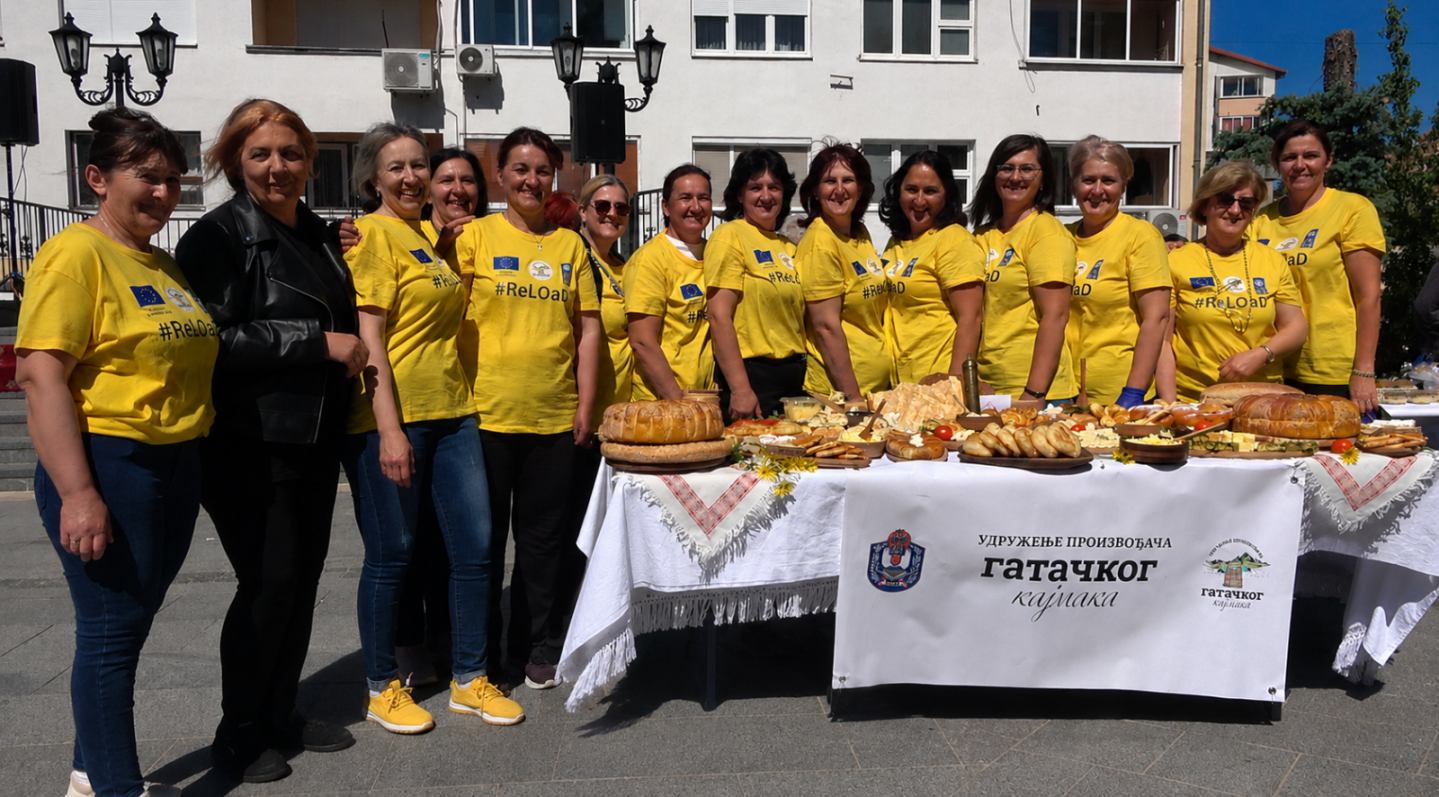
Since 2021, the Gacko Kajmak Producers Association has worked to make Gacko kajmak known both locally and regionally through standardisation and branding. This effort is part of a regional program named ReLOaD2, funded by the EU and implemented by the United Nations Development Program (UNDP). The members of the Association are predominantly female kajmak producers from the rural Gacko. Through the project, preservation and recognition of their traditional knowledge are combined with technical capacity (hygiene and milk quality standards, feeding, and record-keeping), and a traceability system. These combinations are important to tackle challenges that these female small-scale farmers with limited financial resources face in promoting their products.
By producing a more consistent and higher quality of kajmak and introducing standardized packaging and improved product presentation the Association has boosted consumer confidence and interest in the product. The producers have also initiated more collaboration among themselves through the Association, which has allowed them to promote the Gacko kajmak under a common identity. The hope of the Association members is that the initiative will continue to improve their incomes by increasing the value and demand of the product.
The push of EU protection
One of the main tasks of the Association has been to achieve the Protected Designation of Origin (PDO) status for the Gacko kajmak in Bosnia and Herzegovina, and in the EU. PDO certification recognises products with specific ingredients and know-how from a certain region. Cava and Parmigiano Reggiano are some of the well-known products carrying this protection. Since 2024, the Gacko kajmak carries the label on a national level, and an application for PDO was submitted to the EU last year and is currently being evaluated.
"For our Association, the Protected Designation of Origin represents much more than a recognition—it is a confirmation that the knowledge, dedication, and tradition of our producers is acknowledged and protected. This designation gives us an even greater responsibility to preserve the authentic production method of Gacko kajmak matured in a sheepskin sack, while also creating new opportunities to make our product more recognizable in both domestic and international markets. We believe that this protection will contribute to improving the position of our producers, supporting rural development, and preserving the rich gastronomic heritage of Gacko for future generations," says Dragana Milović, President of the Association of Gatački Kajmak Producers.
Supporting sustainable agricultural transition
The standardisation and branding efforts are not only about benefiting the individual producers and farmers in the region. It is a piece of a broader push to make the region’s rural economy more sustainable and aligned with EU norms. Gacko is one of seven municipalities and cities participating in the Sida-financed project – Sustainable Transition of Bosnia and Herzegovina (BiH SuTra), implemented by Stockholm Environment Institute, which aims to support the sustainable transition of local communities in BiH by developing and implementing effective local transition measures across several thematic areas including agriculture, in line with the Green Agenda for the Western Balkans and the EU Green Deal.
In Gacko, the efforts related to kajmak production and marketing fits well into the plans for sustainable transition because they add value to agricultural products, supports local economic development, and equips farmers with capacities related to standardisation, traceability, and quality and hygiene. Simultaneously, they strengthen and develop livestock-based agricultural production. In doing so, they contribute to creating economic incentives to keep traditional and extensive practices and protect land and grasslands.
As part of these efforts, the BiH SuTra project organised a study visit to Sweden in May 2026, bringing partner communities to explore more productive, environmentally responsible, and better connected agriculture to local development. Participants visited Swedish farms and identified practices that could be adapted and applied back home.
What comes next
For the Gacko Kajmak Producers Association, the goal is a fair price for a product they have been working on for generations. But the questions facing rural small producers as Bosnia and Herzegovina pursues EU integration is whether the country’s traditional, small-scale rural production can be modernised without losing what makes it unique.
“Our Association will continue working to preserve the traditional production of Gacko kajmak while strengthening the capacities of our producers and encouraging new members, especially young women who wish to remain in rural areas and continue this tradition. We are committed to improving production conditions, strengthening our collective market presence, and further promoting Gacko kajmak as one of the symbols of Gacko and Bosnia and Herzegovina. At the same time, we will continue our efforts to achieve EU protection, expand market opportunities, and ensure that this unique product provides sustainable livelihoods for the families who produce it. We believe that by combining tradition with innovation, we can preserve our heritage while creating a stronger future for the next generation of producers.”
Dragana Milović, President of the Association of Gacko Kajmak Producers
Initiatives like ReLOaD2 and BiH SuTra are excellent starting points, but scaling the model beyond Gacko and other pilot municipalities will require additional efforts such as investment in export support for small producers, accessible financing, and formal recognition of women’s role in agricultural production.
Gacko kajmak may soon carry an EU label. Whether that recognition translates into lasting income for the women who produce it, generation after generation, will be the real test of whether traditional food can work as a driver for sustainable rural transition.
Discover the News and Updates section, delivering the latest updates and insightful content across various topics. Stay informed with most recent news articles, reports, and publications, of the BiH SuTra project.












 Banovici
 Breza
Breza
 Gacko
Gacko
 Gradiška
 Kakanj
 Ugljevik
 Živinice
 Ministarstvo vanjske trgovine i ekonomskih odnosa BiH
 Stockholm Environment Institute
 Sweden