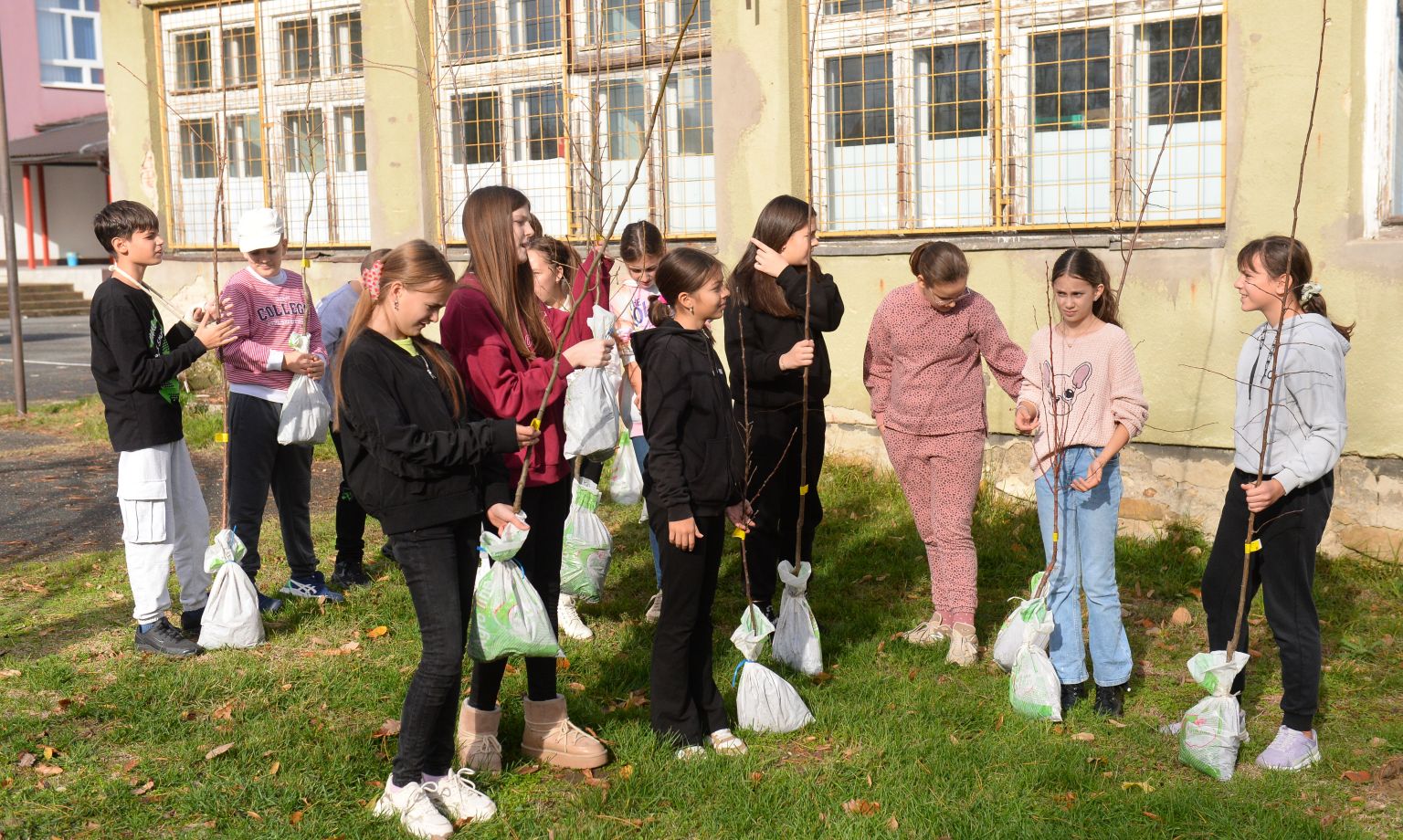
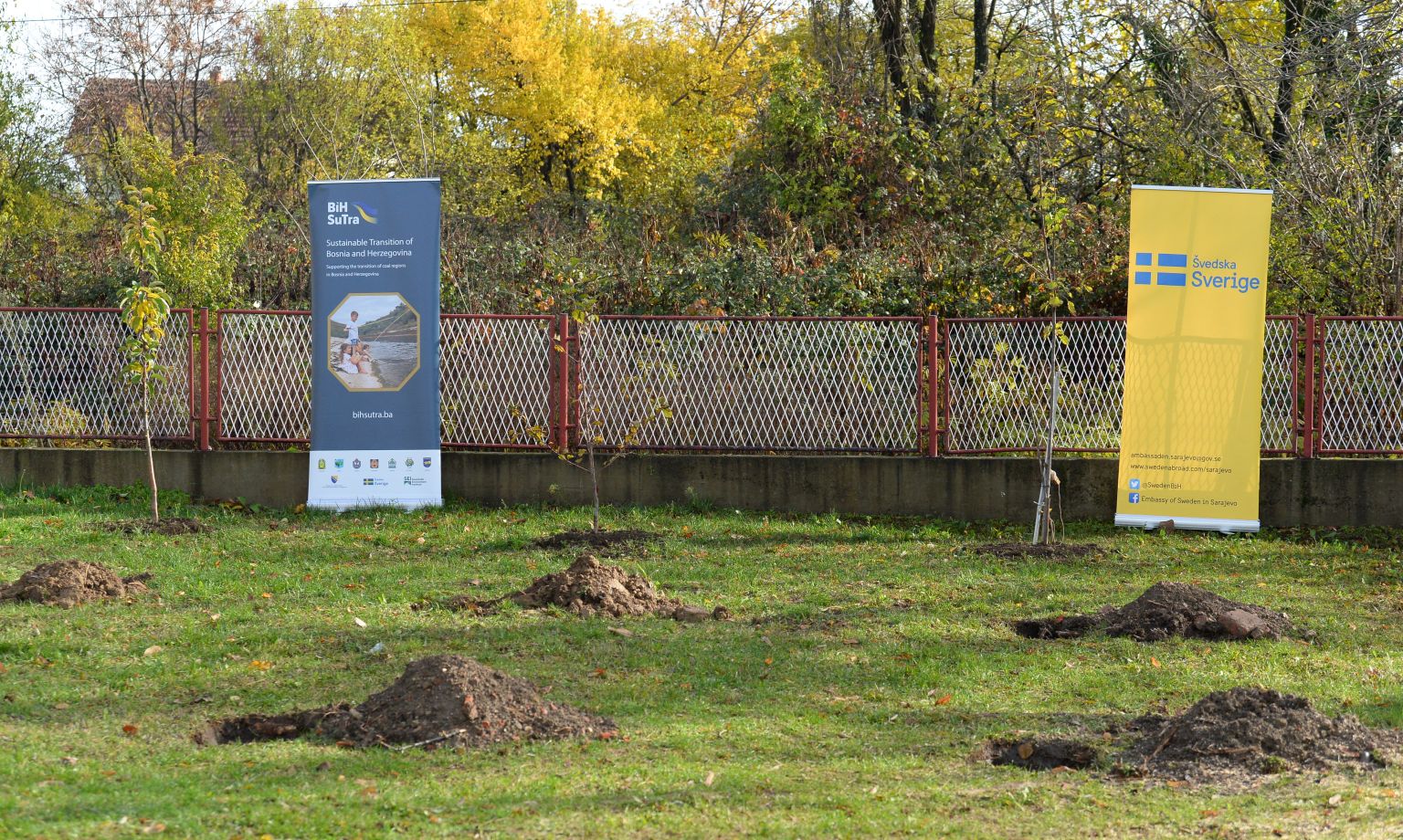
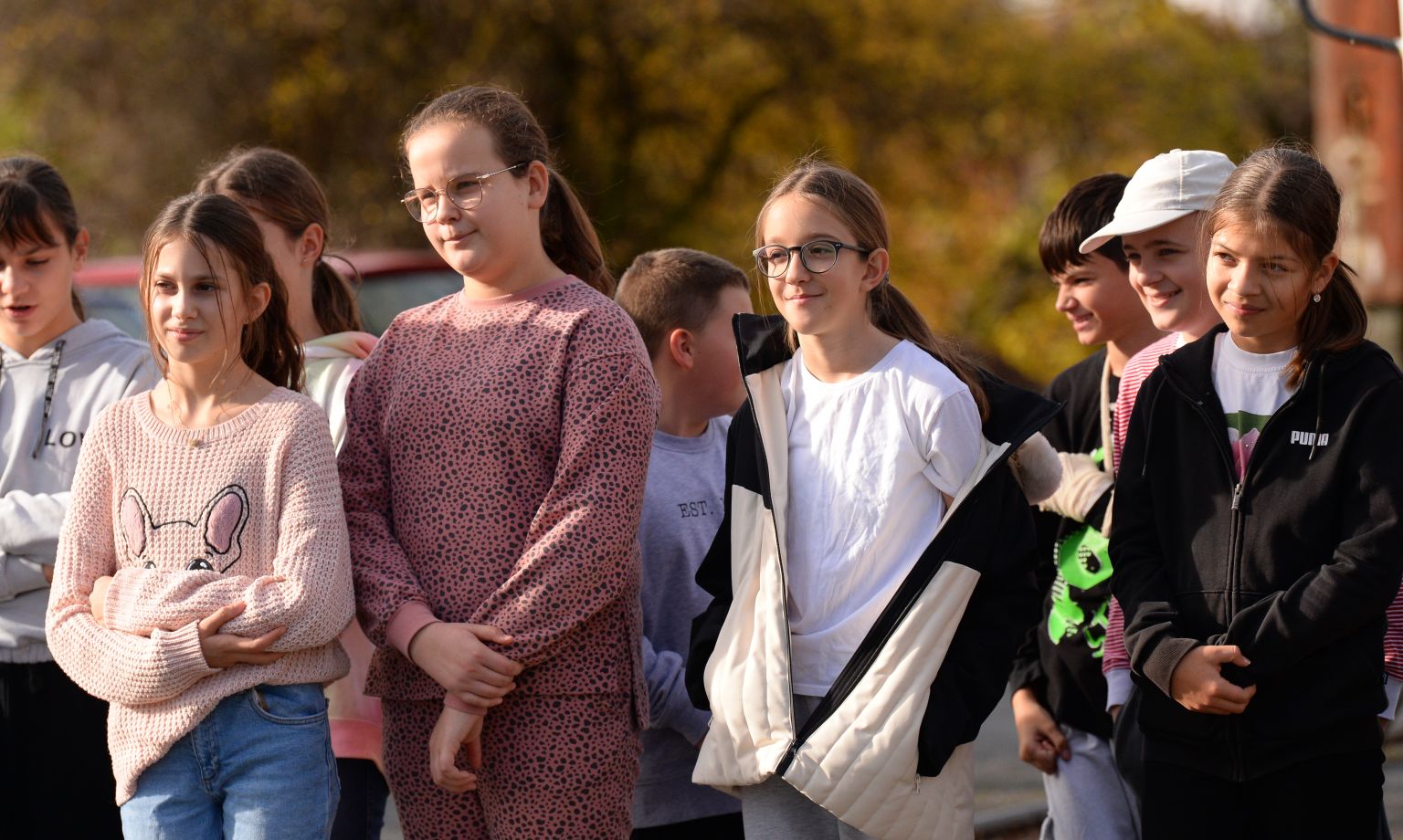
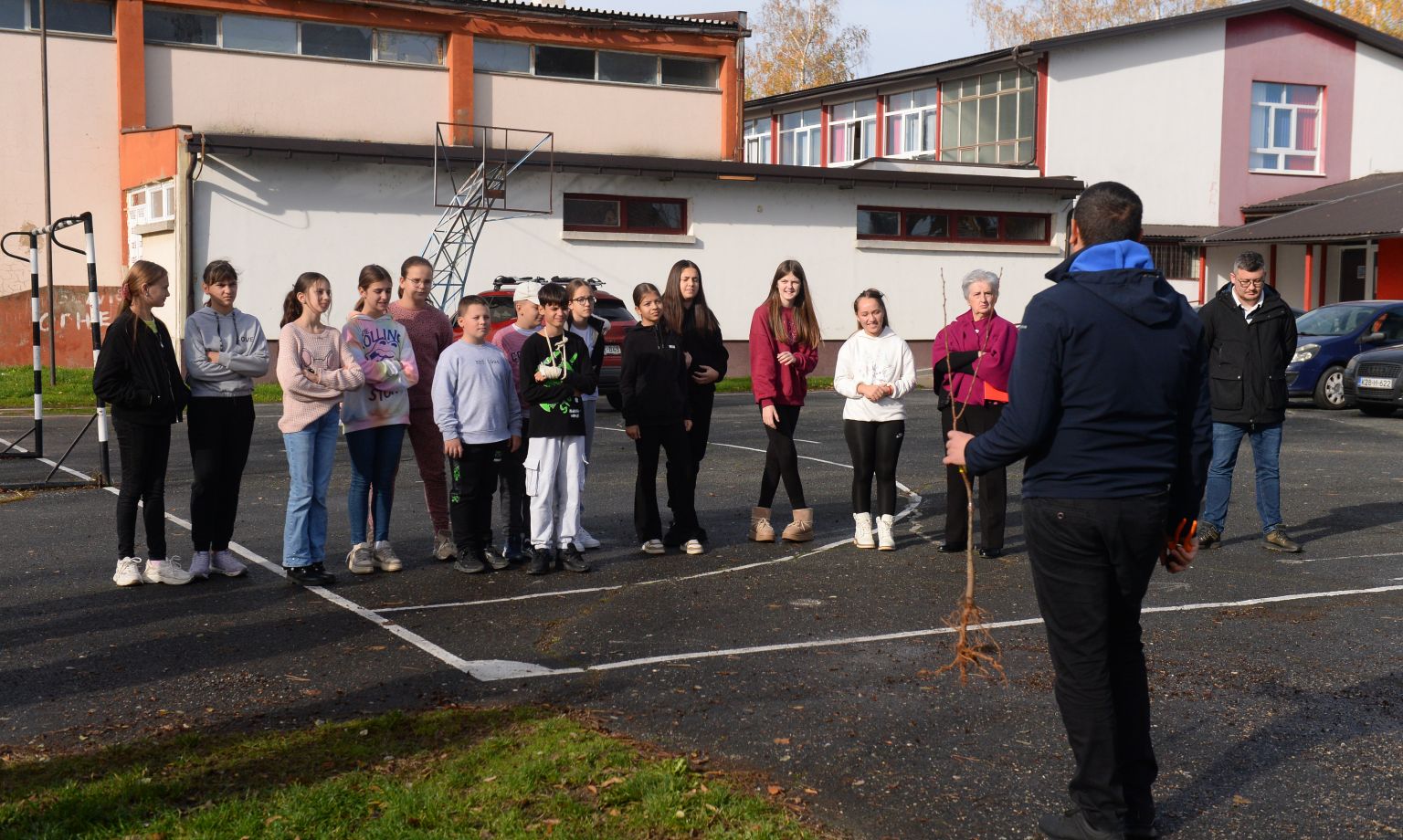
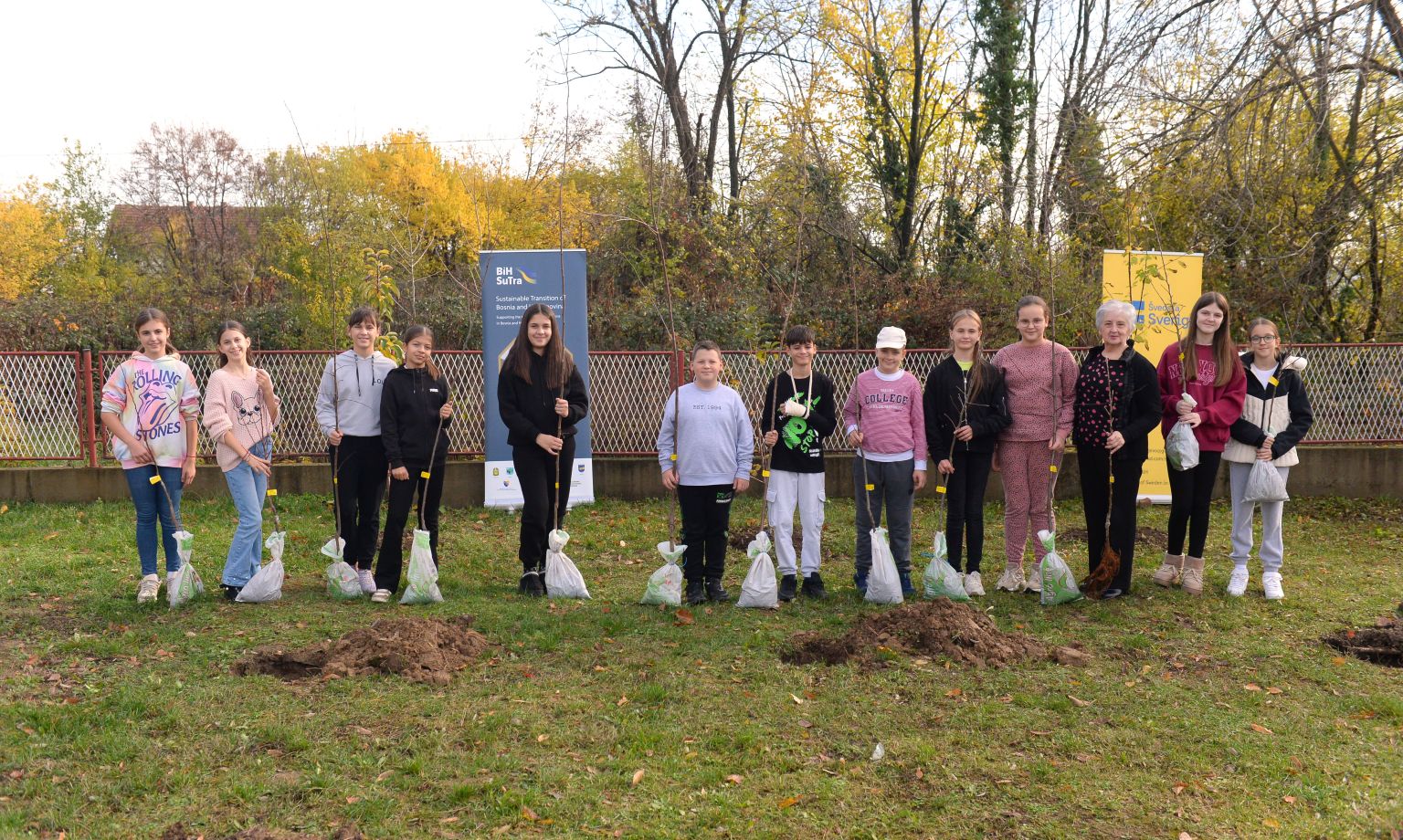
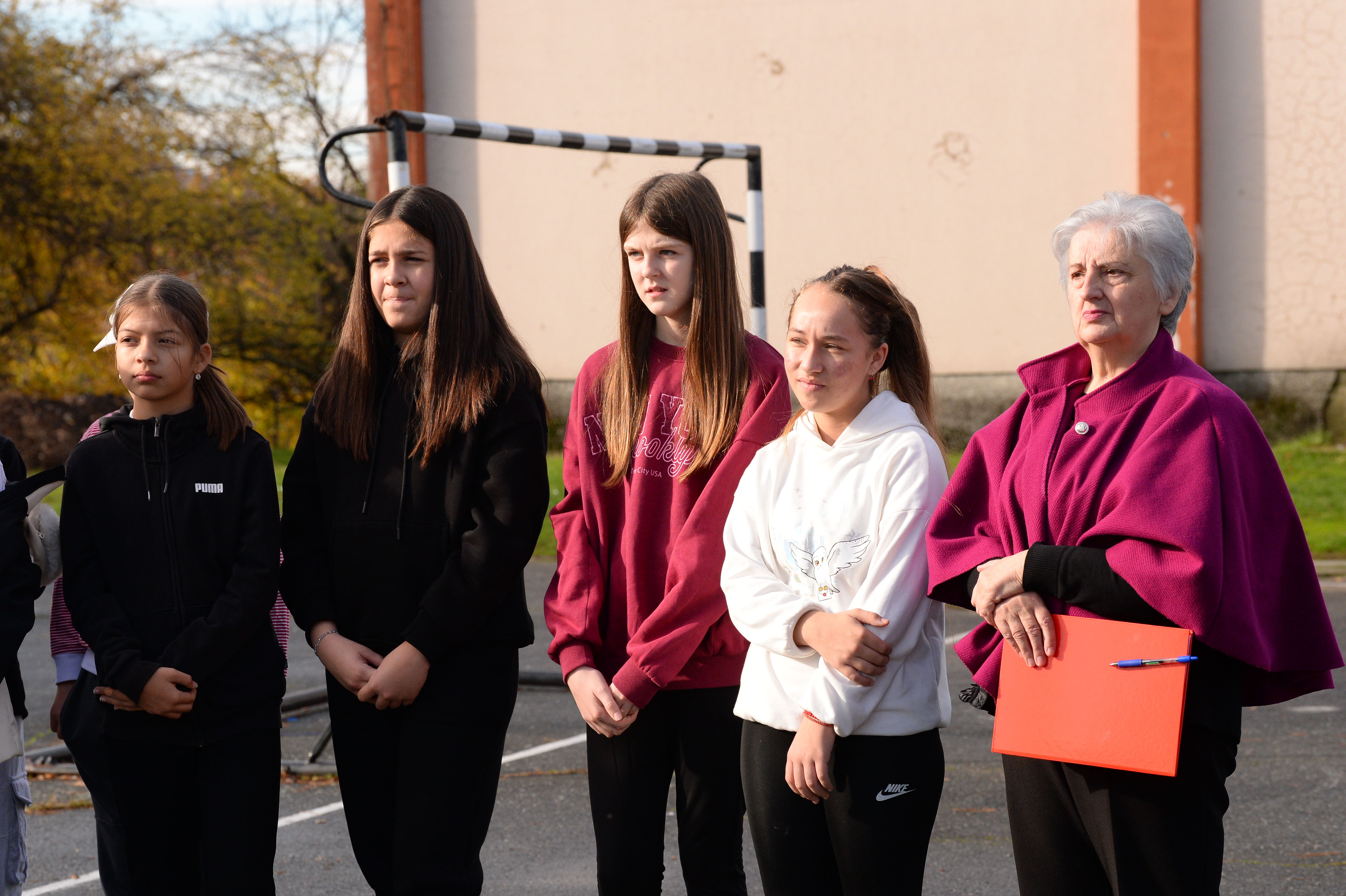
 Students and the school principal of Vuk Karadžić Primary School in Zabrđe. Photo: Foto Tomić.
Practical tree-planting activities and an educational workshop brought together students from two schools in Ugljevik, connecting hands-on learning with sustainable agriculture, environmental protection and local food production.
How does a fruit tree grow, what does it need to thrive and how does fruit make its way from planting to our tables? These were some of the questions explored by students from Vuk Karadžić Primary School in Zabrđe and Mihailo Petrović Alas Secondary School Centre in Ugljevik, who took part in practical and educational activities on 17 November as part of the BiH SuTra project.
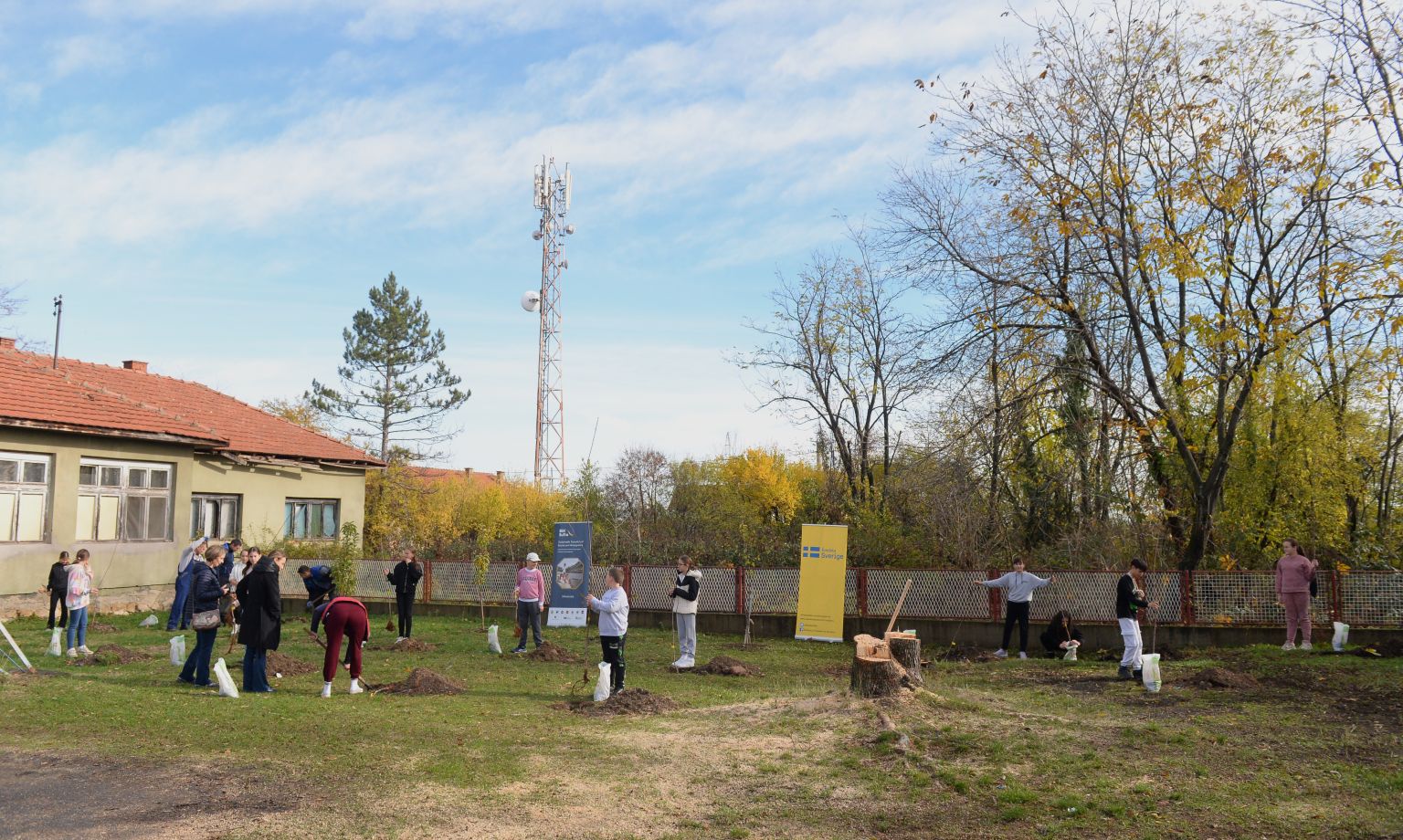
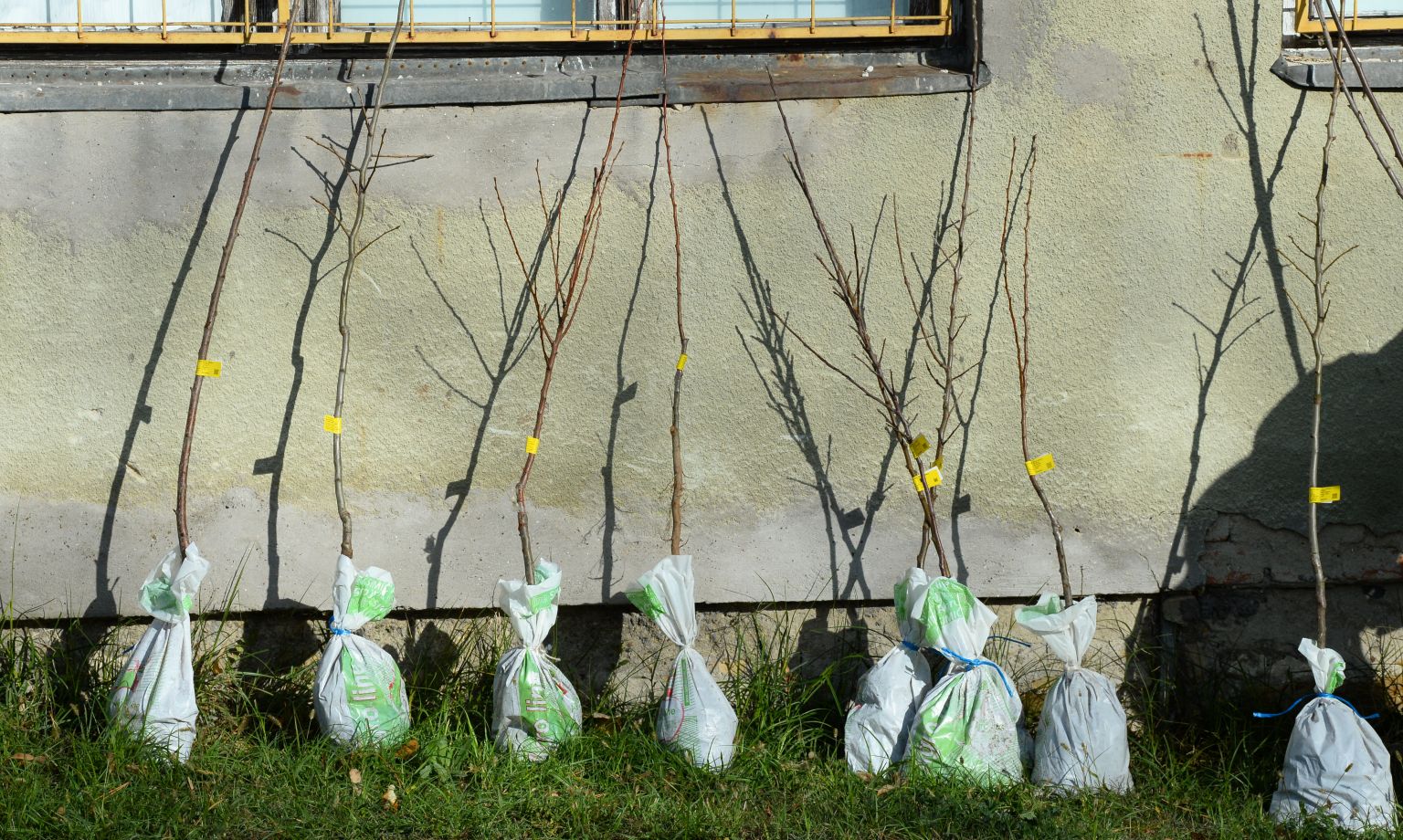
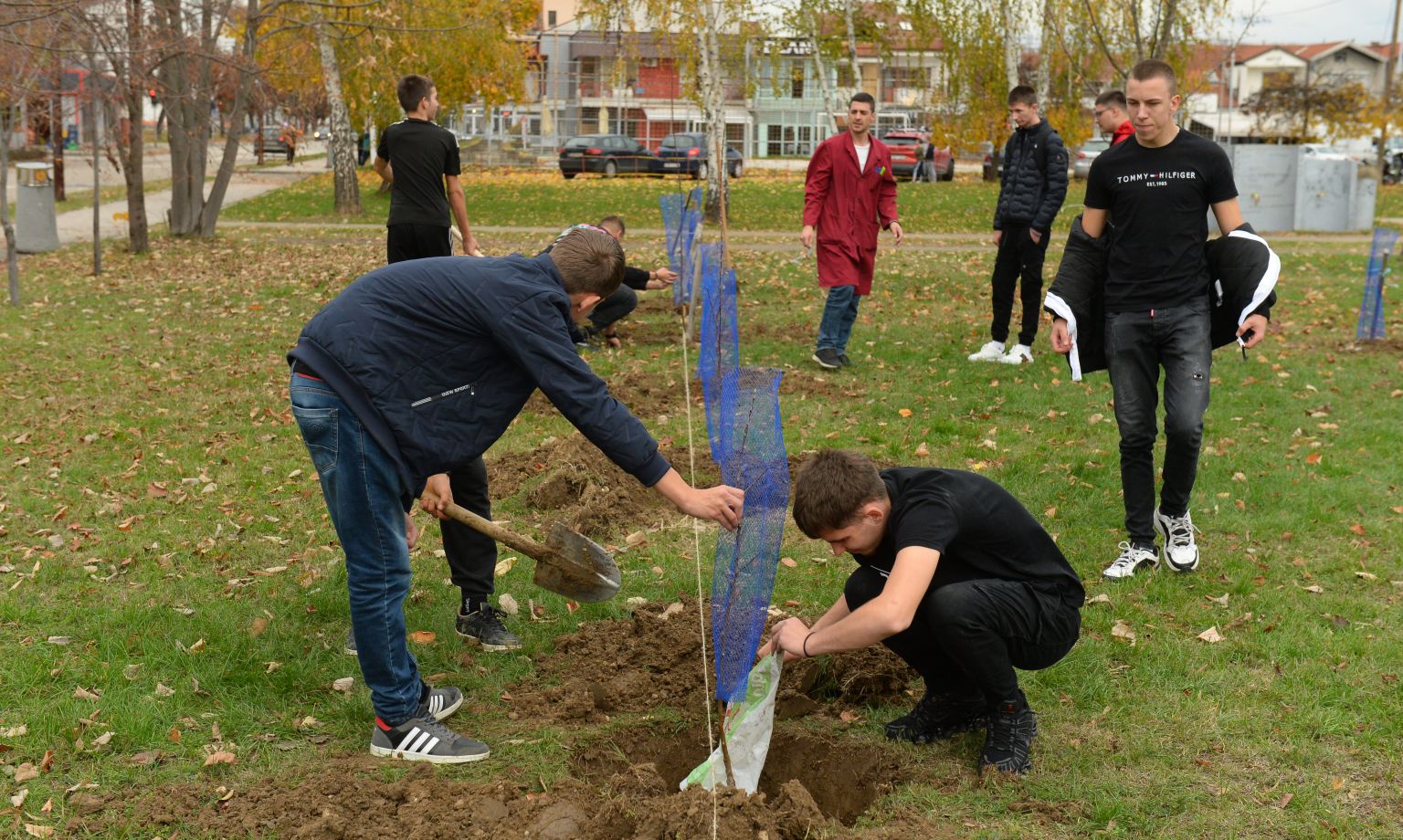
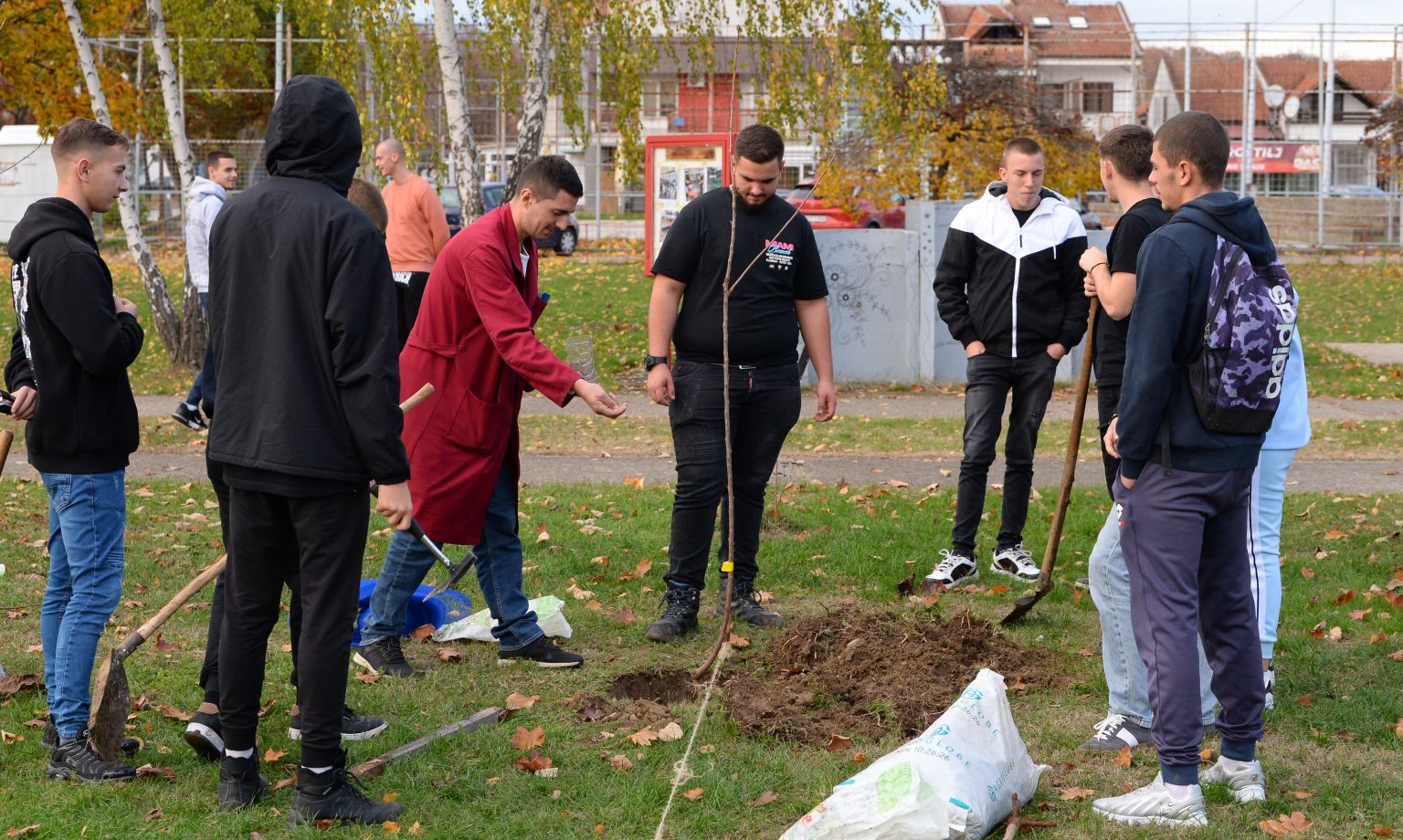
A total of 30 fruit trees were planted during the activities, with 15 trees planted at each school. Students actively participated in planting and learned about the key steps in establishing a fruit orchard, including selecting healthy planting material, preparing the soil, planting trees, fertilising, irrigation and protecting plants to ensure their healthy growth. Beyond improving their school surroundings, the newly planted trees will also provide opportunities for practical learning in the years to come.
Workshop highlights the journey from sapling to fruit
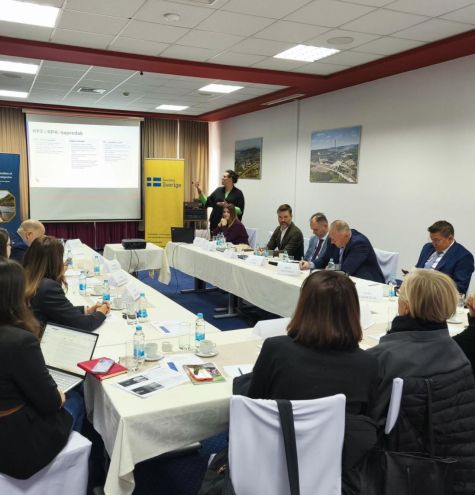
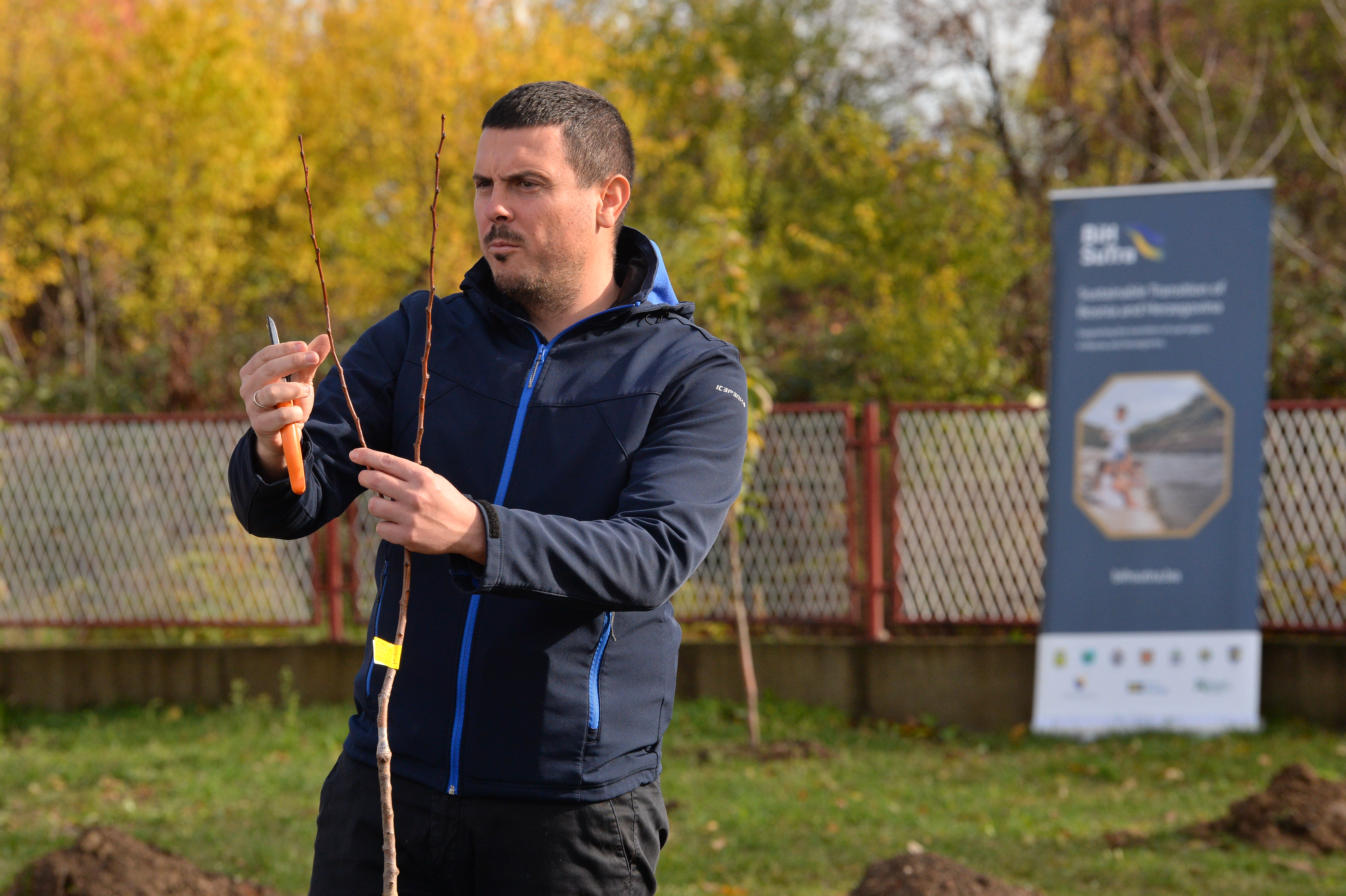
At Vuk Karadžić Primary School in Zabrđe, the activities included an educational workshop entitled „From sapling to fruit – discovering the journey of fruit from planting to consumption“, designed for sixth-grade students. Through interactive discussions, practical examples and hands-on activities, students learned about the different stages of fruit growing, from selecting healthy and certified planting material and preparing the soil to planting, caring for and protecting fruit trees. Particular attention was given to fruit varieties characteristic for the Ugljevik area, especially plums, apples and pears. Students also learned about seasonal food production, different growing methods and how fresh fruit can be processed and stored, making the most of locally available produce throughout the year.
The workshop was led by Aleksandar Krstić, a representative of the Municipality of Ugljevik, who guided students through the different stages of fruit growing and explained the importance of proper planting, ongoing tree care and plant protection. "Activities like these are important because they give young people an opportunity to learn about sustainable agriculture and environmental protection through direct experience. By involving students in planting fruit trees and learning about local food production, we are also encouraging them to take greater responsibility for their surroundings and recognise the importance of sustainable practices in their community," said Aleksandar Krstić.
Sub-heading: Students plant trees at their school
The workshop was followed by a practical planting activity, during which 13 sixth-grade students each planted a fruit tree. The school principal and a teacher also joined in, bringing the total number of trees planted at the school to 15. The school's principal, Nada Načić, highlighted the importance of giving children the opportunity to put their knowledge into practice. With 142 students across 16 classes, the school sees its green surroundings as an important space for both learning and community life. Many of its students come from families with their own orchards, making fruit growing a familiar part of their everyday lives. Nevertheless, as Načić explained, every opportunity to learn something new is valuable. “We wanted each student to plant their own fruit tree, so that even after graduating from our school, they can always come back, visit their tree and see how it is growing. We hope that one day they will also enjoy its first fruits, proudly remembering that they helped make their school surroundings a more beautiful place. I would like to thank the Stockholm Environment Institute, the Swedish International Development Cooperation Agency (Sida) and the BiH SuTra project for supporting this meaningful initiative,” said Nada Načić, Principal of Vuk Karadžić Primary School in Zabrđe.
Learning from home and from school
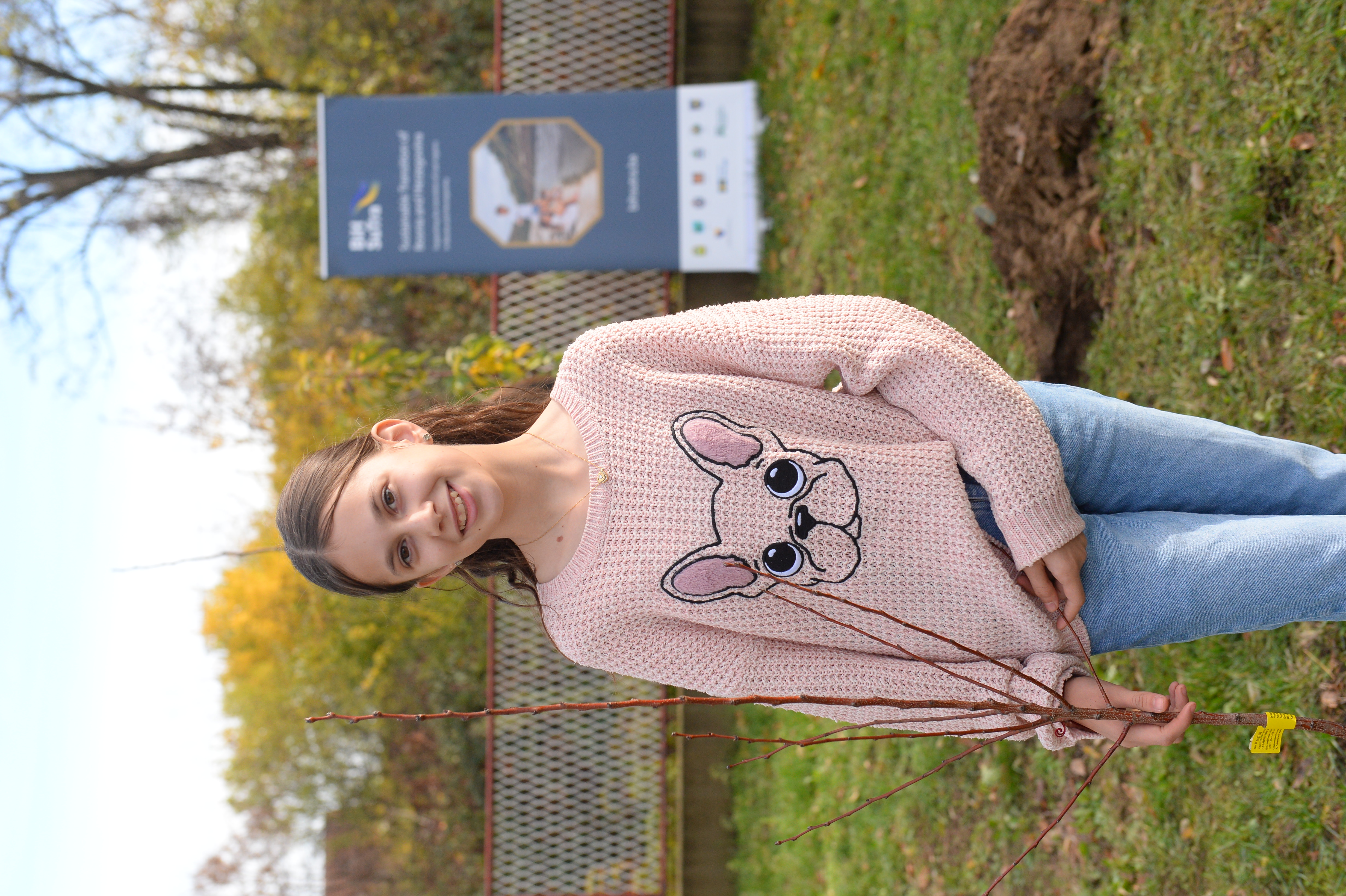
For the students, the activity was also an opportunity to share their own experiences and connect what they learned at school with what they already know from home. Petra Vasilić, one of the sixth-grade students, planted an apricot tree and even gave it a name. “My dad loves planting fruit trees, so I have often joined him in planting and grafting them. We have many different varieties of pears in our orchard and my dad always tells me that it is best to eat locally grown, organic fruit because it is healthier than the fruit we buy in shops. My favourite fruit tree is the cherry tree because cherries are so sweet and I really love them,” said Petra, who named her newly planted apricot tree Mica.
Trees to support learning and improve school surroundings
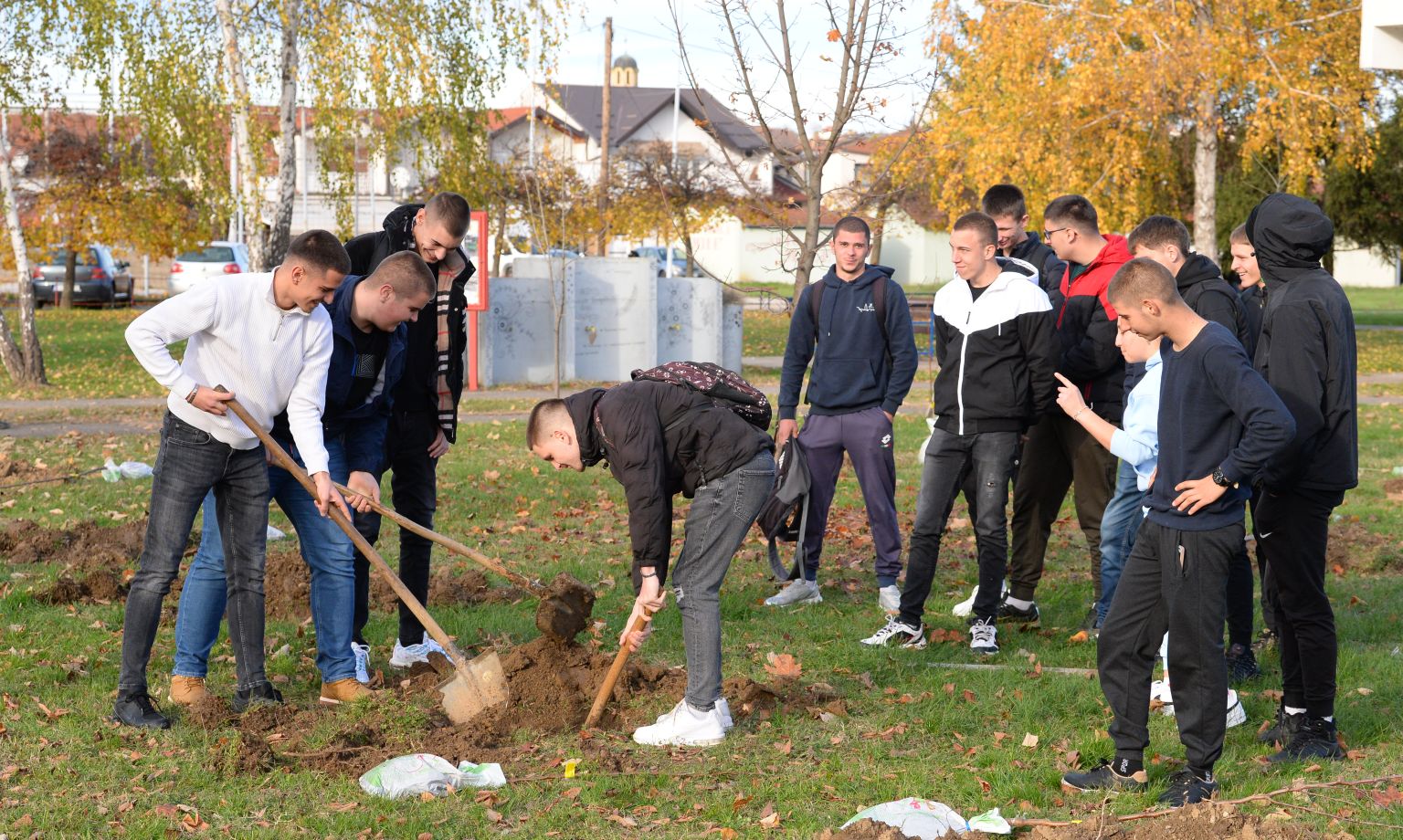
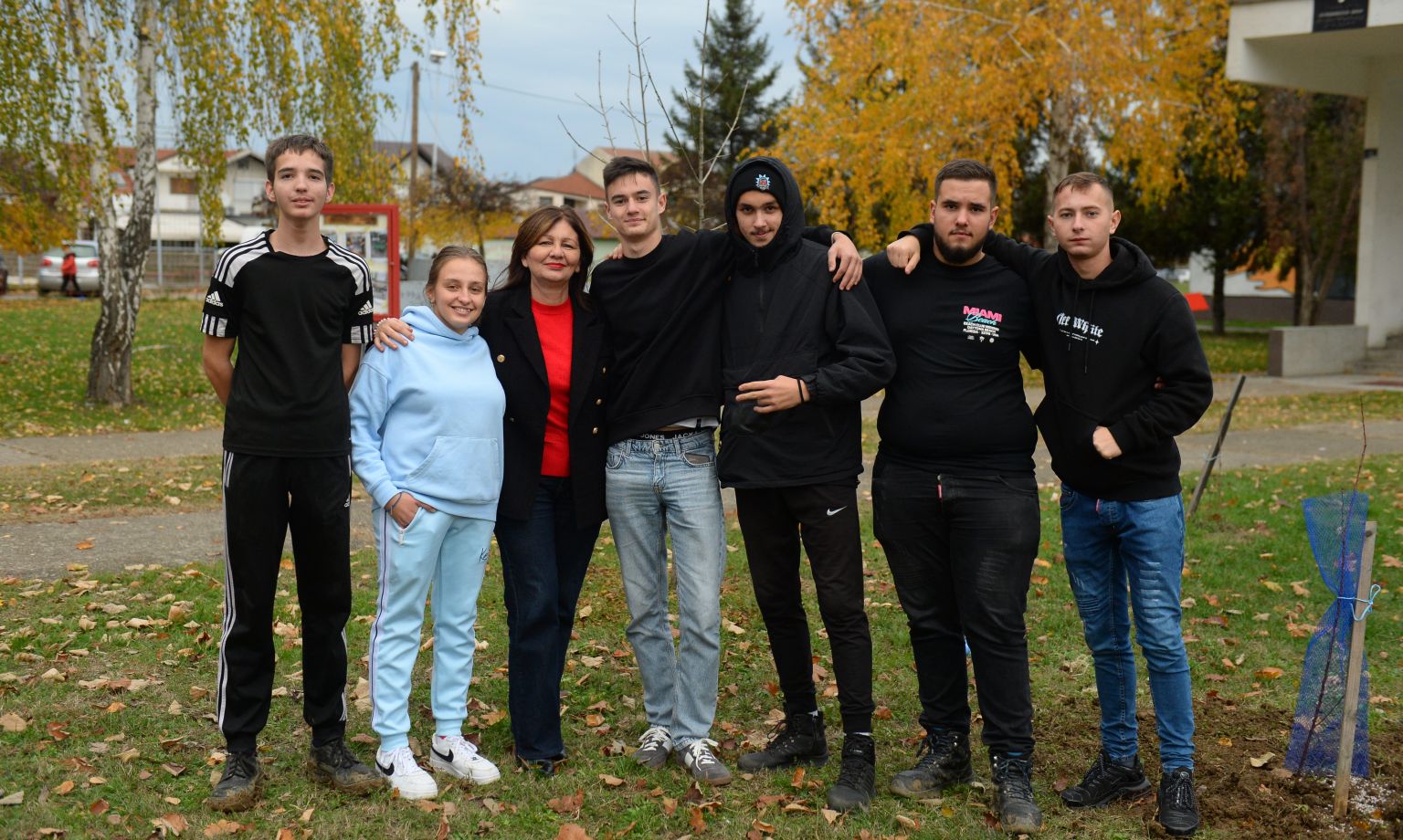
At Mihailo Petrović Alas Secondary School Centre in Ugljevik, the focus was on practical tree planting, with students taking part in planting 15 fruit trees on the school grounds. Through teamwork and hands-on participation, they had the opportunity to develop basic practical skills in planting and caring for fruit trees while contributing to the improvement of their school environment.
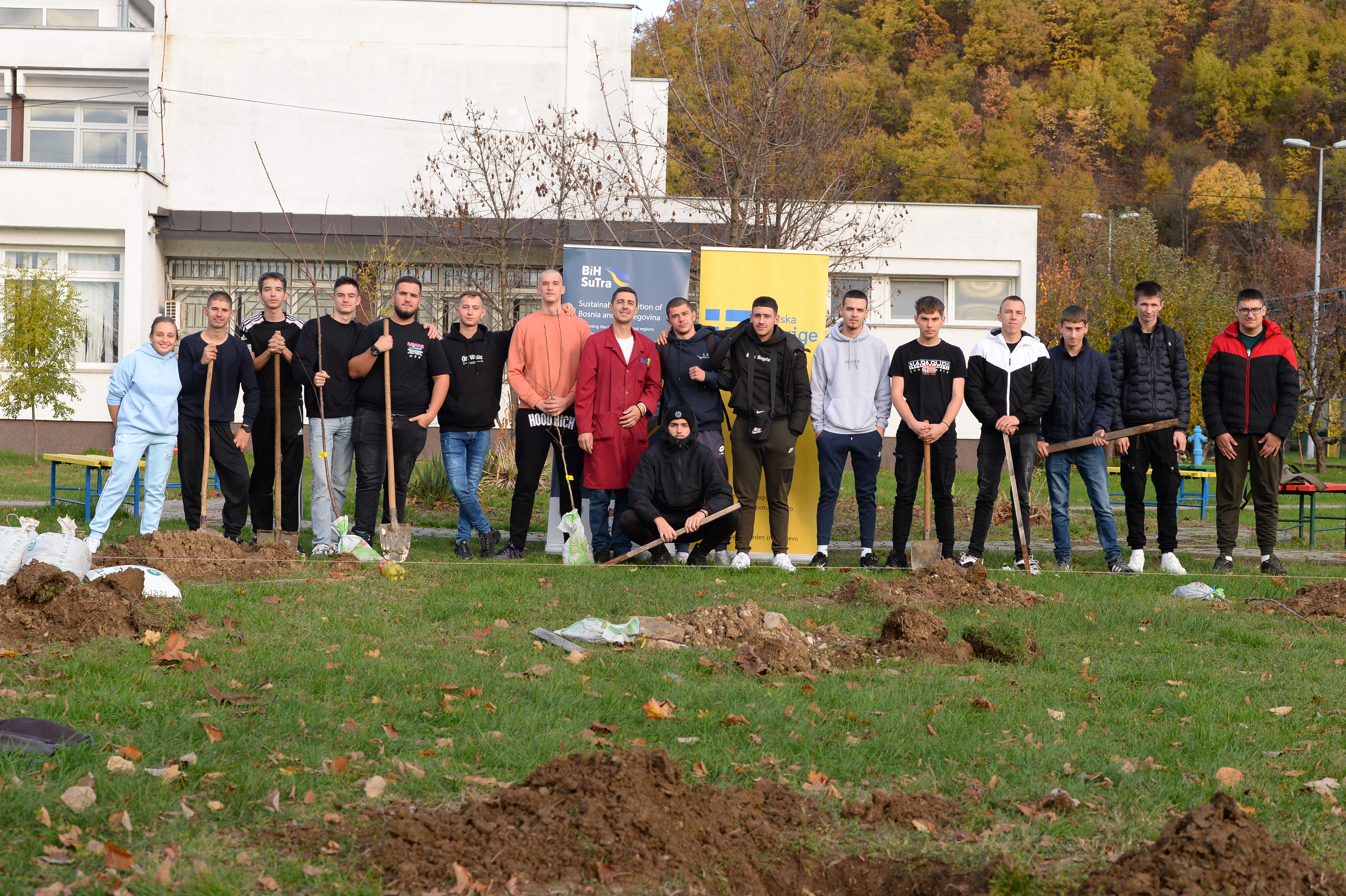
For the school, the newly planted trees represent more than just the future provision of fruit. Borislav Jović, a teacher of mechanical engineering subjects, explained that the school has extensive outdoor spaces but lacks sufficient natural shade during the summer months. The trees will help create a more pleasant environment for students and staff and provide opportunities to hold certain educational activities outdoors. The school also plans to add benches among the trees, which students specialising in metalworking and welding could make as part of their practical training. “This activity is especially meaningful for our students, who will be able to return even after graduating from secondary school and proudly remember that they took part in planting the trees and implementing this project. We are delighted to have brought this initiative to life and to have created something lasting for future generations,” said Jović.
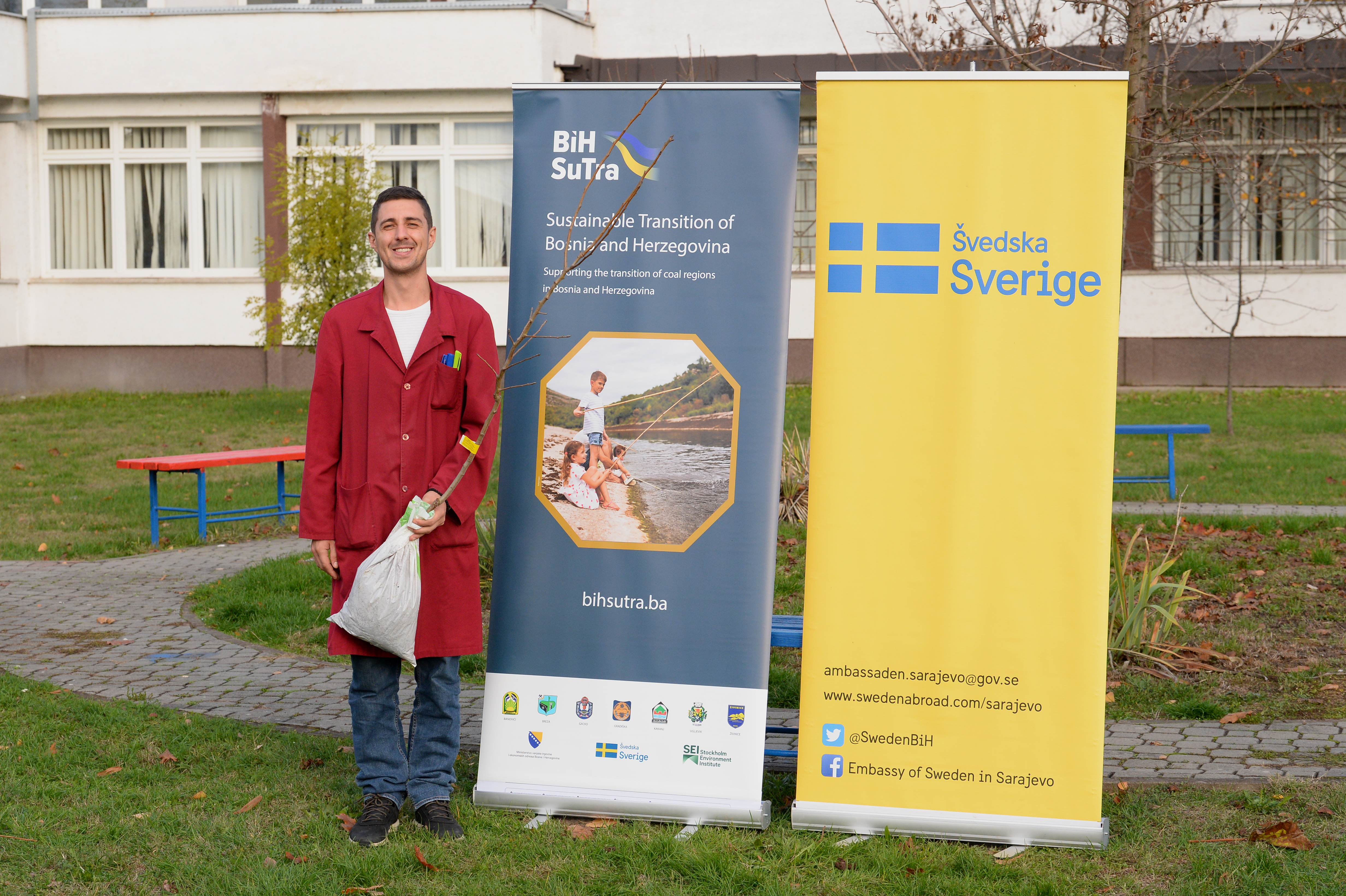
Students enjoy a hands-on experience
The students also appreciated the opportunity to learn and work together outside the classroom. For Mirko Ćetković, a third-year student, planting different fruit varieties in the schoolyard was both an enjoyable experience and a chance to contribute to a greener environment. “Today was a really wonderful and fun experience. In addition to spending time together, we had the opportunity to learn something new and get to know each other better. I took part in planting plum, apple, pear and cherry trees in our schoolyard and I’m glad that we were able to make our school environment greener and more beautiful. If there are more opportunities like this, I would be happy to take part again,” said Mirko.
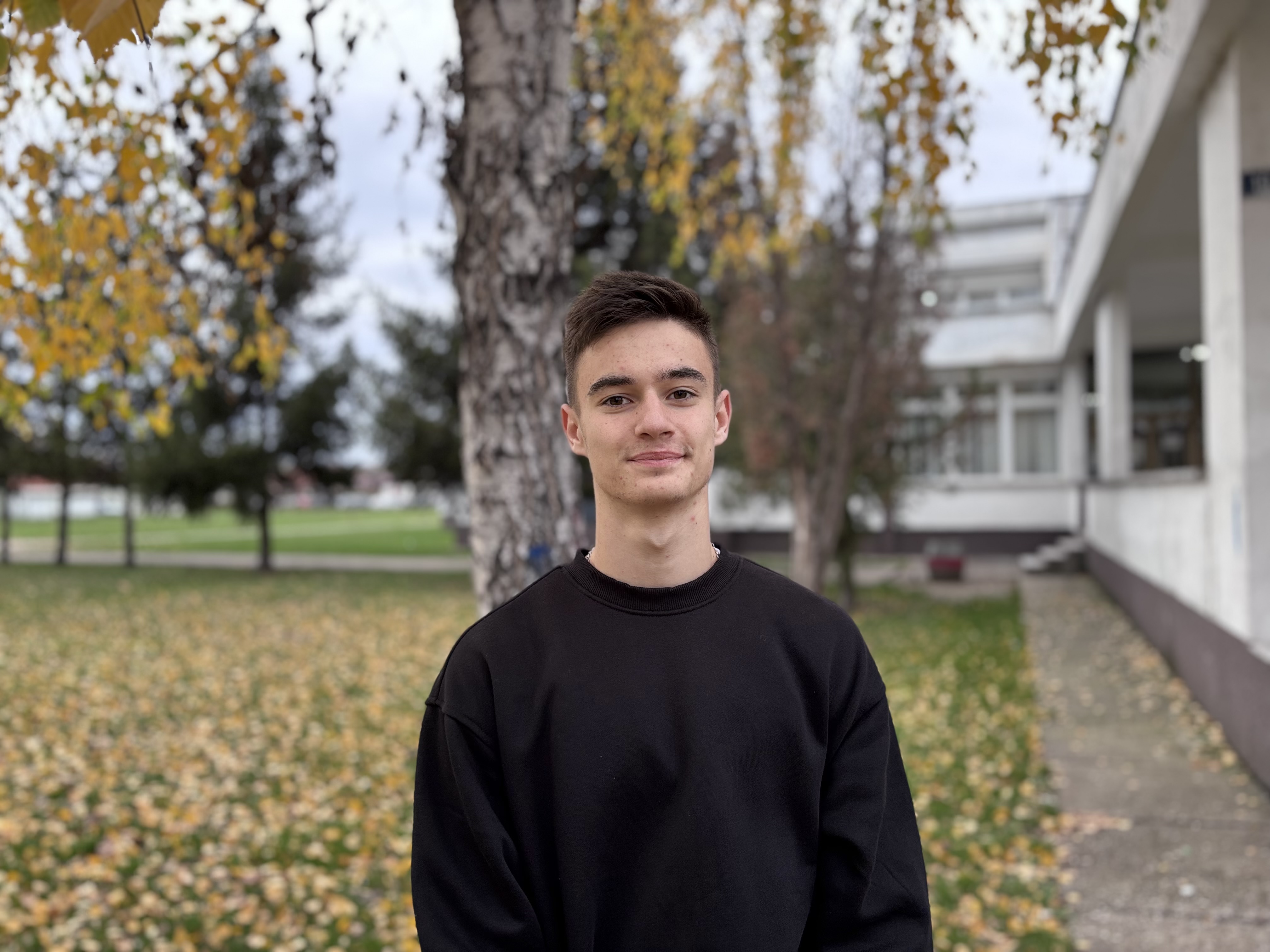
Supporting sustainable habits from an early age
The activities were implemented by the NGO Korijeni Ugljevik, which coordinated the practical and educational components in cooperation with the two schools and other participants. Vladana Jovanović, President of the NGO Korijeni, emphasised that the aim was to give students an opportunity to discover more about agriculture, food production and environmental protection through practical experience. “Planting a tree is just the beginning – caring for it and following its growth also teaches patience, responsibility and respect for nature. By introducing students to local fruit varieties, seasonal food production and the different ways fruit can be used, we hope to encourage their interest in agriculture and the food we produce,” said Jovanović.
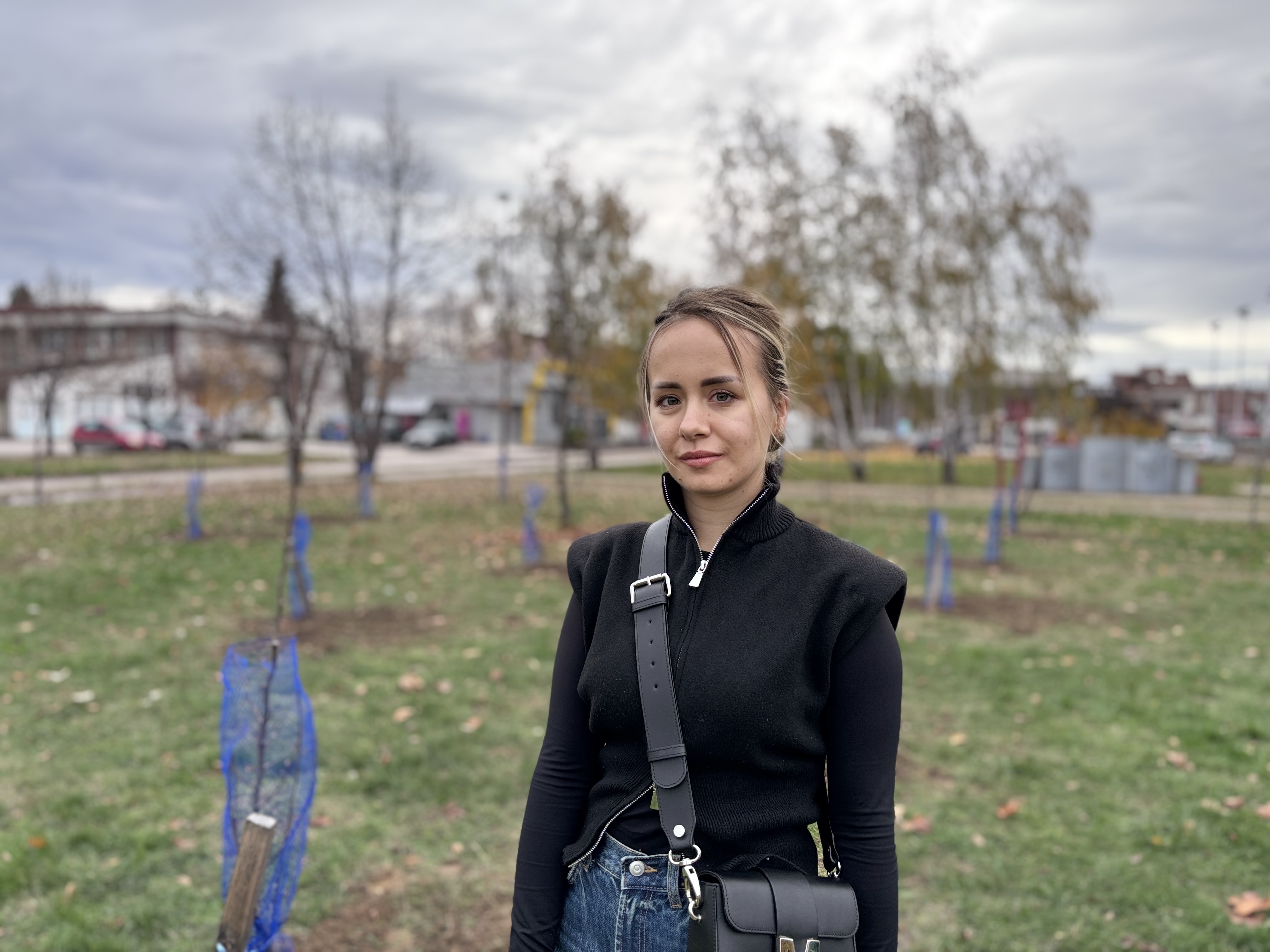
By combining practical activities with education, the initiative helped strengthen the connection between learning and everyday life, demonstrating how school environments can become valuable spaces for learning about nature, food production and sustainable practices. The newly planted trees will continue to serve as a long-term educational resource, giving students the opportunity to follow their growth, care for them and, in time, enjoy their fruit.
The activities in Ugljevik were organised within the framework of the BiH SuTra project, funded by the Swedish International Development Cooperation Agency (Sida) and implemented by the Stockholm Environment Institute (SEI). The NGO Korijeni Ugljevik organised and delivered the activities, with support from the project's local partners.
Discover the News and Updates section, delivering the latest updates and insightful content across various topics. Stay informed with most recent news articles, reports, and publications, of the BiH SuTra project.